Grade II listed house in Knightsbridge
Location
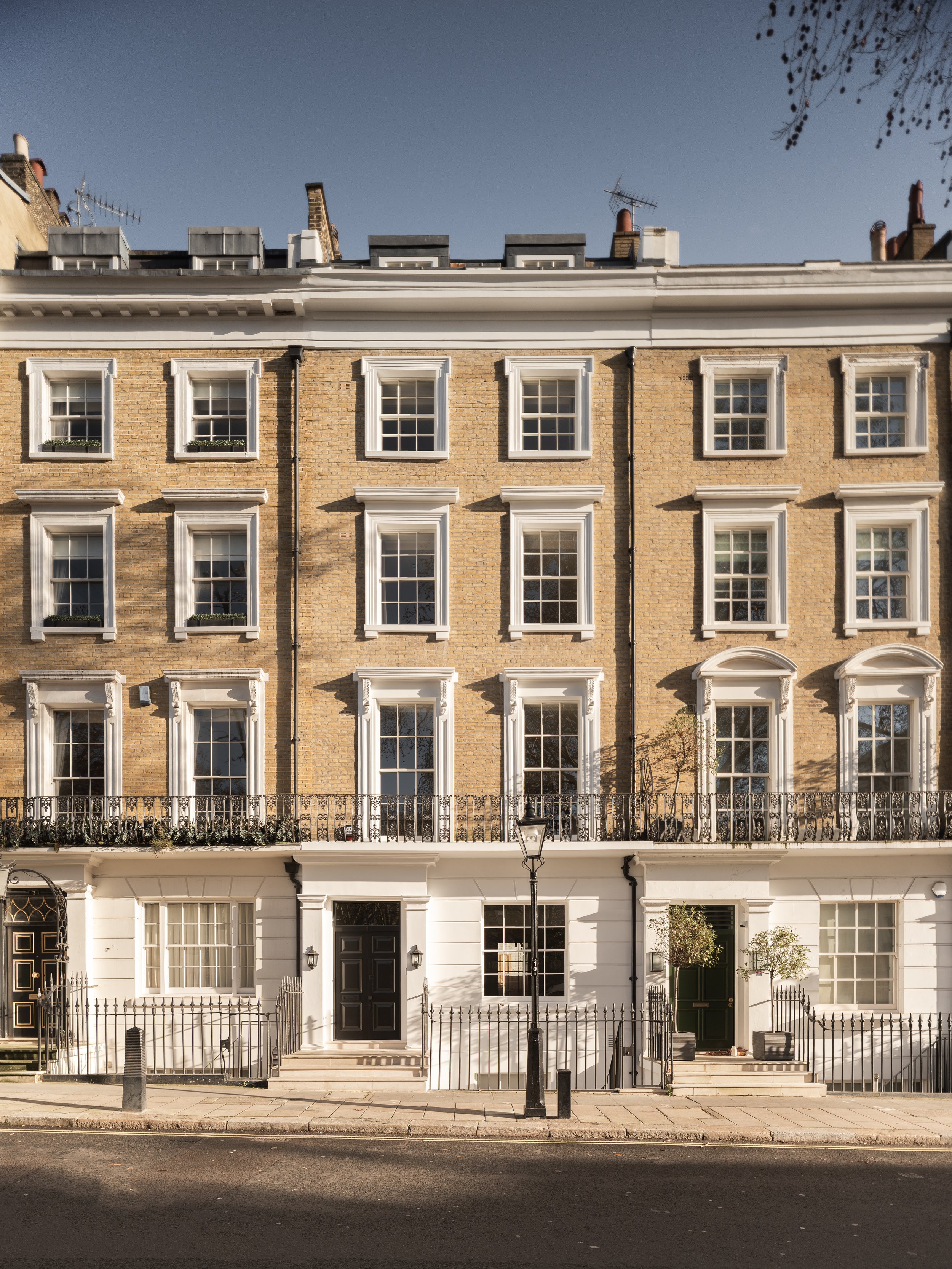
The Montpelier Square Refurbishment project involved the restoration of a Grade II listed house nestled in the heart of the prestigious Knightsbridge area in London.
History
In 1824 John Belts of Brompton Row and Thomas Weatherley Marriott of Knightsbridge acquired an area of land north of Brompton Row and began the development of the Montpelier Square area, starting with the south side. Historic maps confirm that this area of land remained open before the developments initiated by Belts and Marriott, but that development was indeed underway by the mid-late 1820s. However, it was not fully populated until the 1850s and, despite being predominantly the work of the same builder, the variance in style of housing across the square reflects the period of construction which lasted over three decades, alongside successive changes by owners and occupants. The east side, which includes the site, was entirely constructed in the 1840s with the final component of the square, the north side, being completed in the early 1850s. Shortly after in 1867 the communal garden within the square was vested by the Metropolitan Board of Works under the Gardens in Towns Protection Act of
1863.
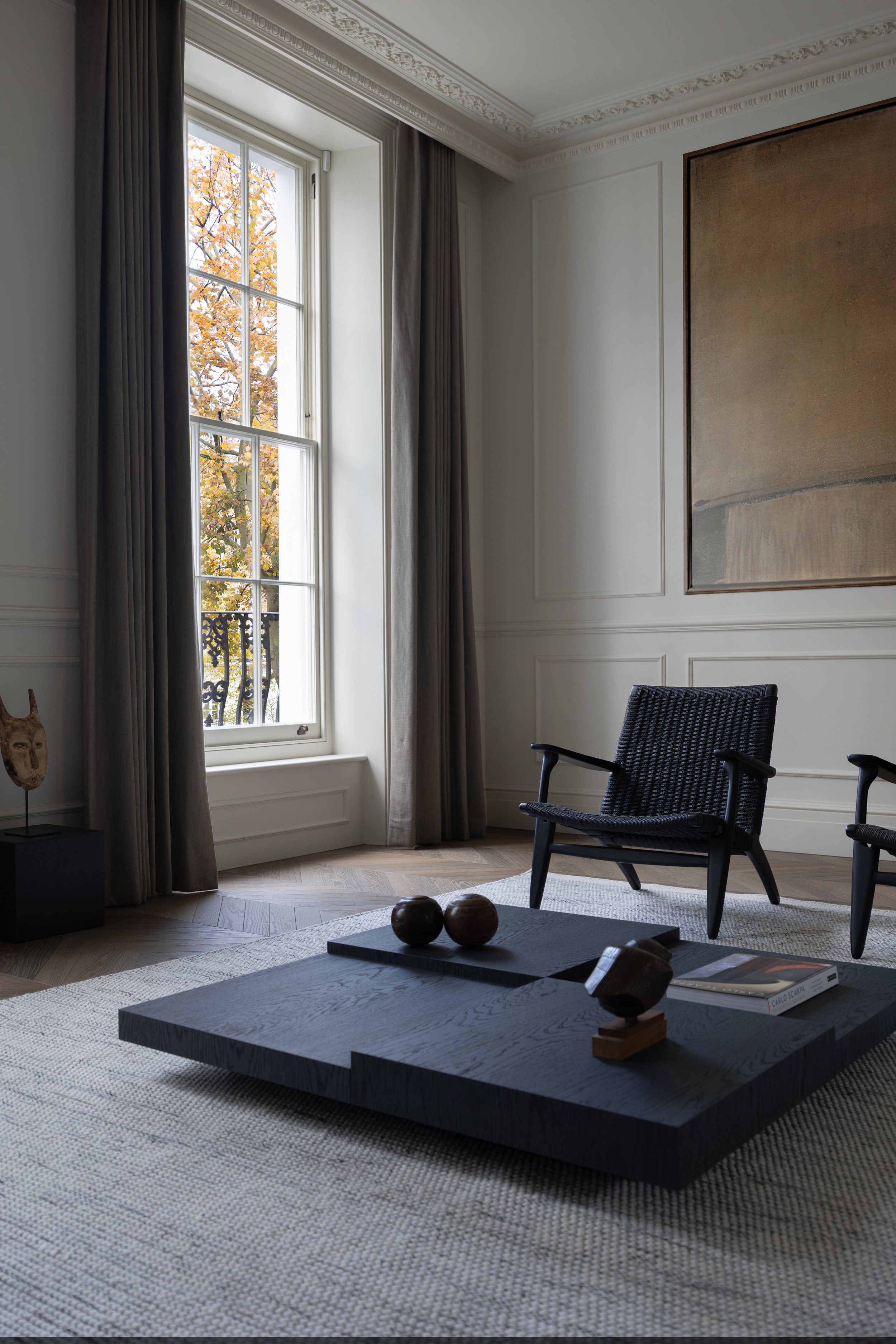
Years of neglect and numerous refurbishments had eroded the original character and layout on every floor. Our approach began with meticulous historical research, leading to a conservative restoration of the property. This involved meticulously rebuilding historical architectural features and mouldings while preserving the original sequence of spaces on each floor.
.
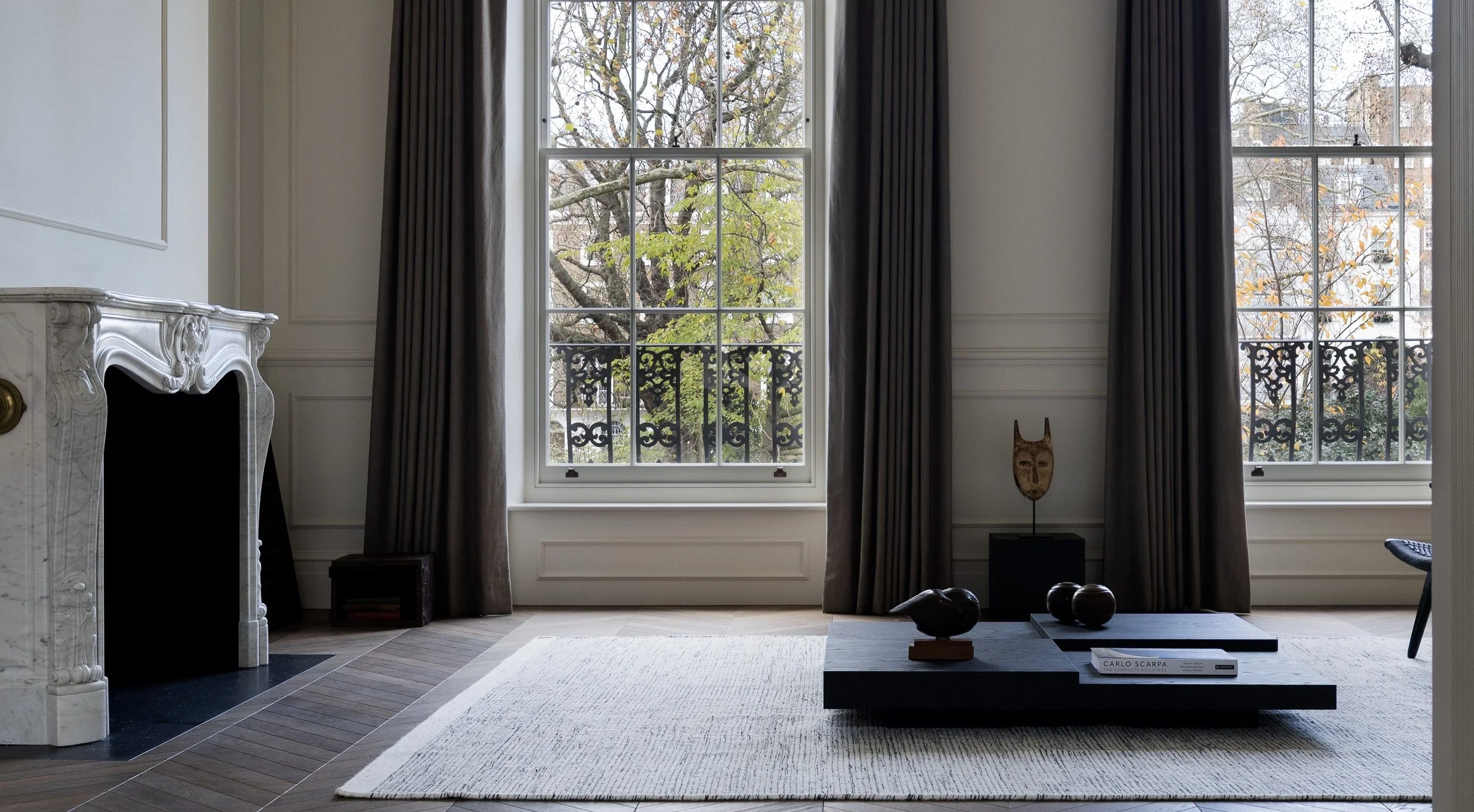
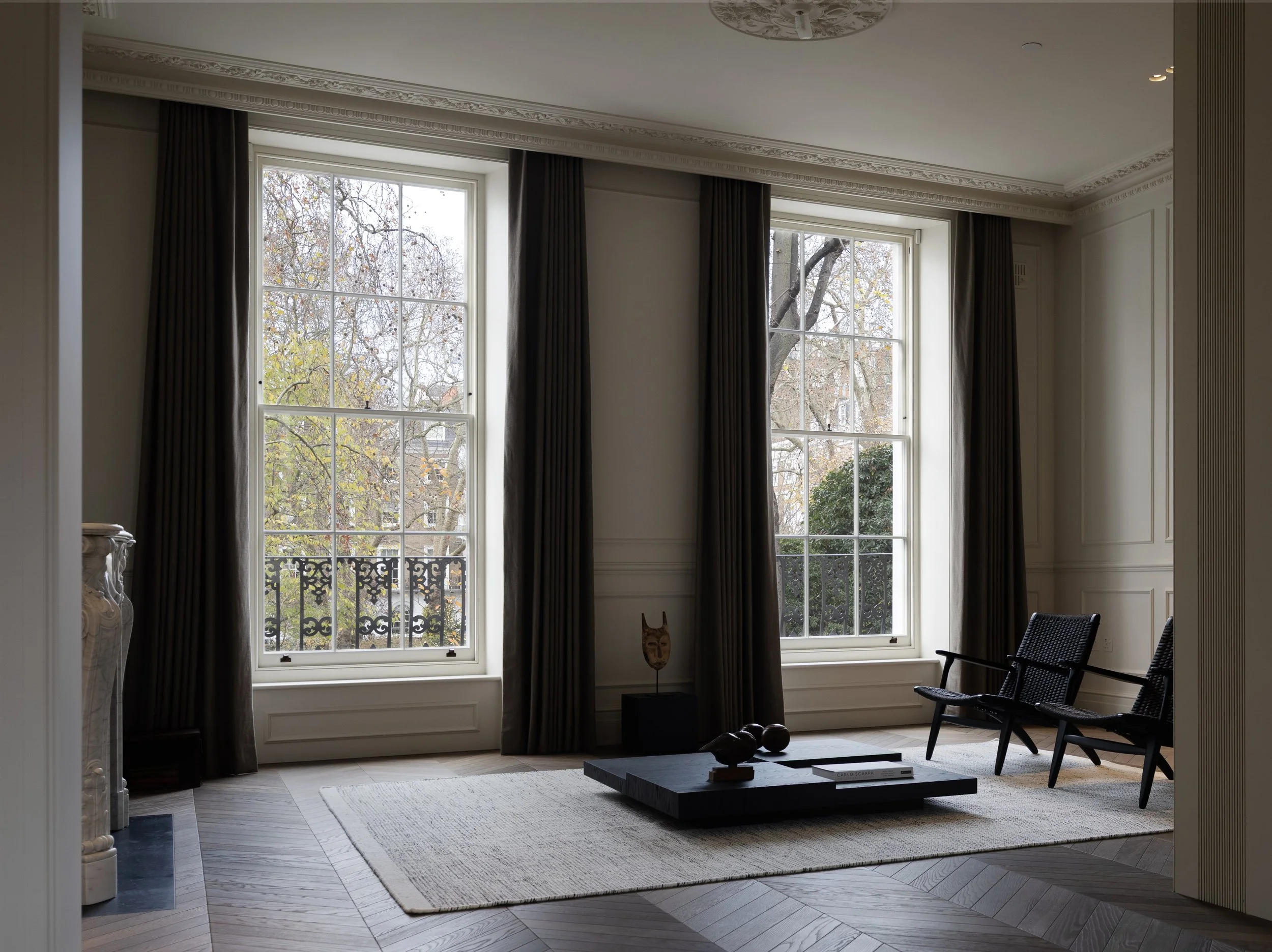
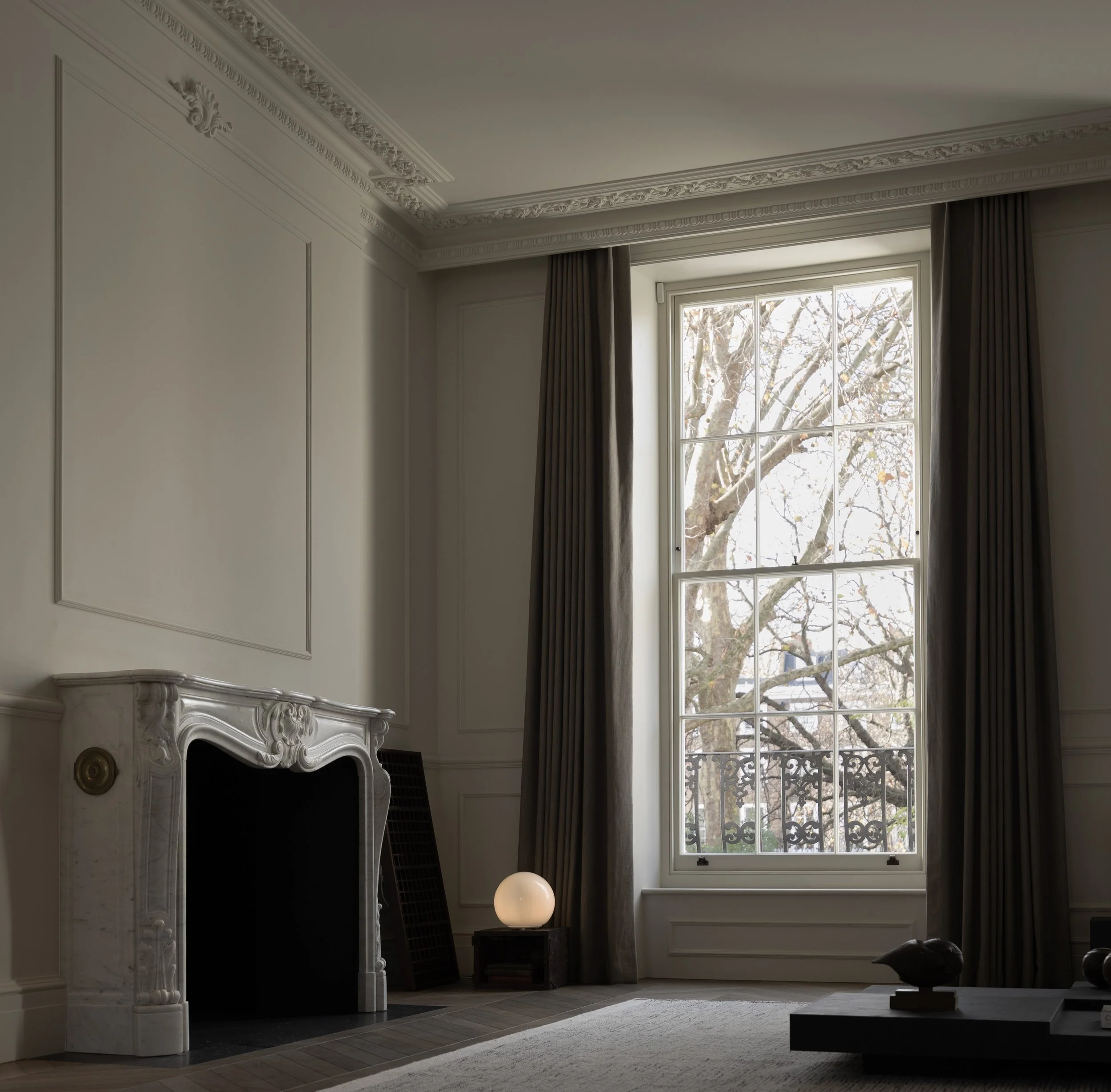
The first-floor drawing room is the most spectacular space in the house and the one with the greatest heritage value.
Our approach was to restore it as closely as possible to its original historical character, carefully re-establishing proportions, detailing and atmosphere in line with the period.
A key feature of the room is a reclaimed antique French fireplace, sourced specifically to reflect the fashion of the time, when prestigious interiors often incorporated imported fireplaces from France.
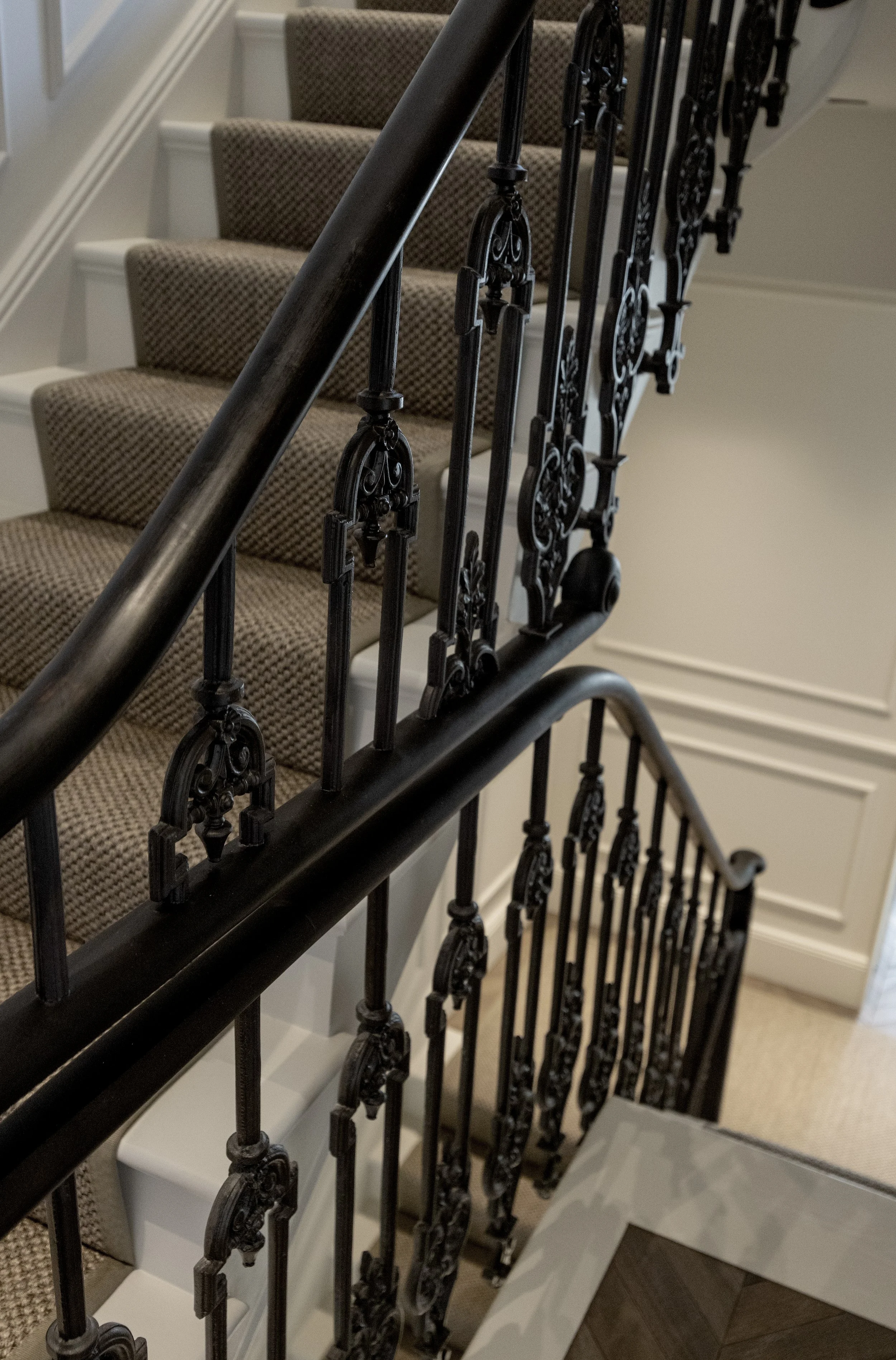
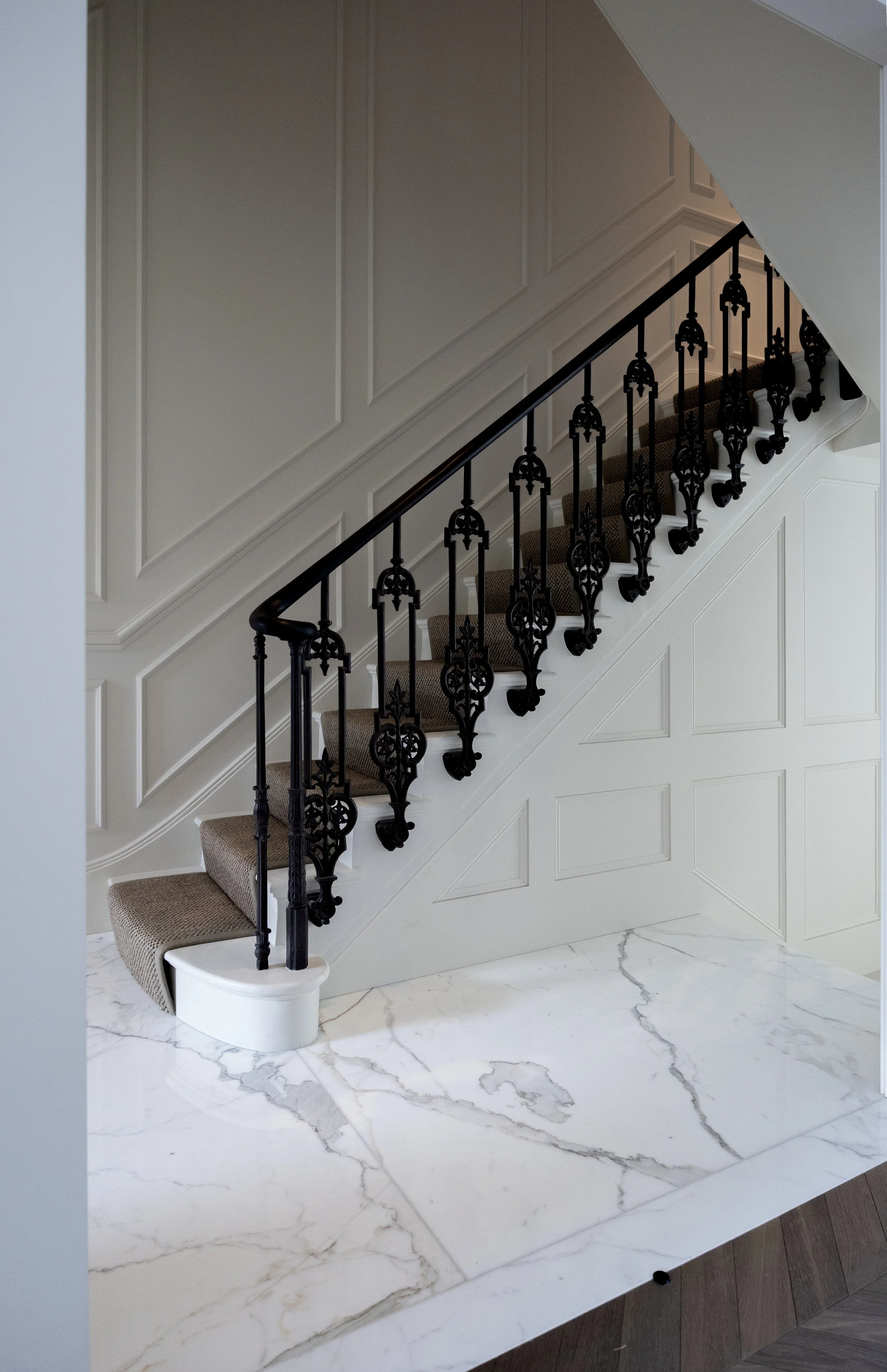
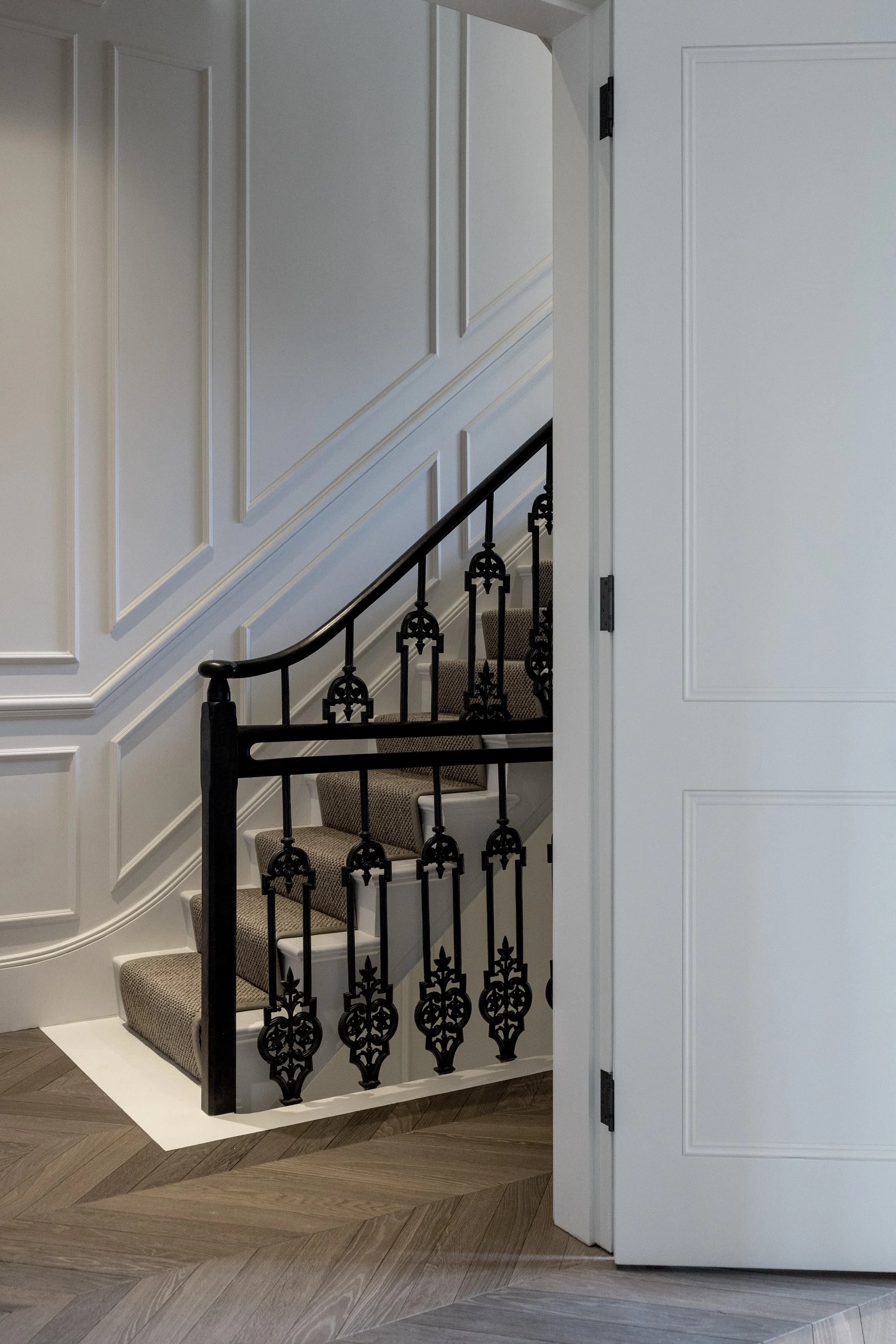
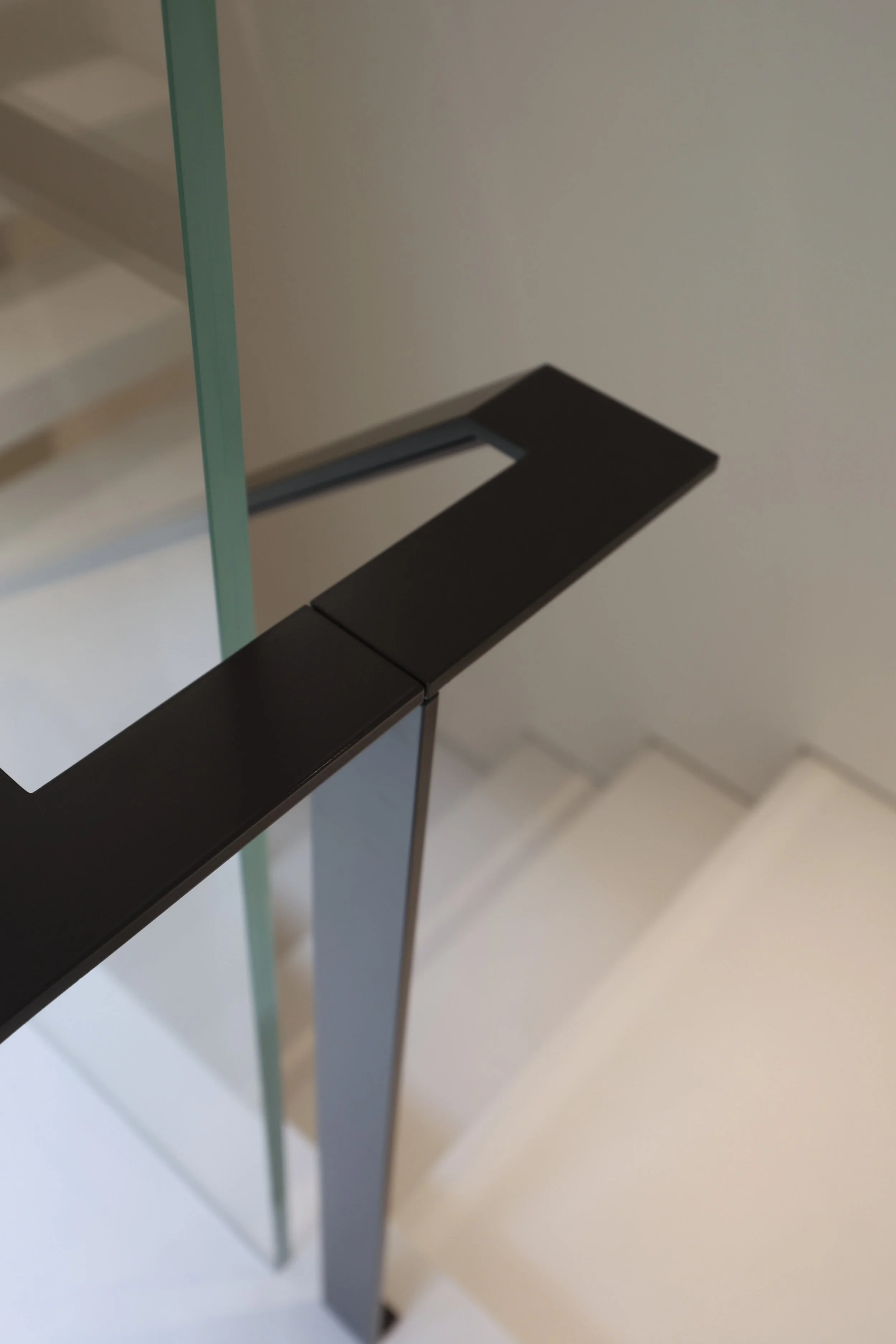
One of the most spectacular original features of the house is the staircase handrail, distinguished by its highly sophisticated design. The elegantly curved solid timber handrail is complemented by striking cast-iron spindles, together forming a sculptural and refined composition. This important heritage element has been carefully restored to preserve its original craftsmanship and character.
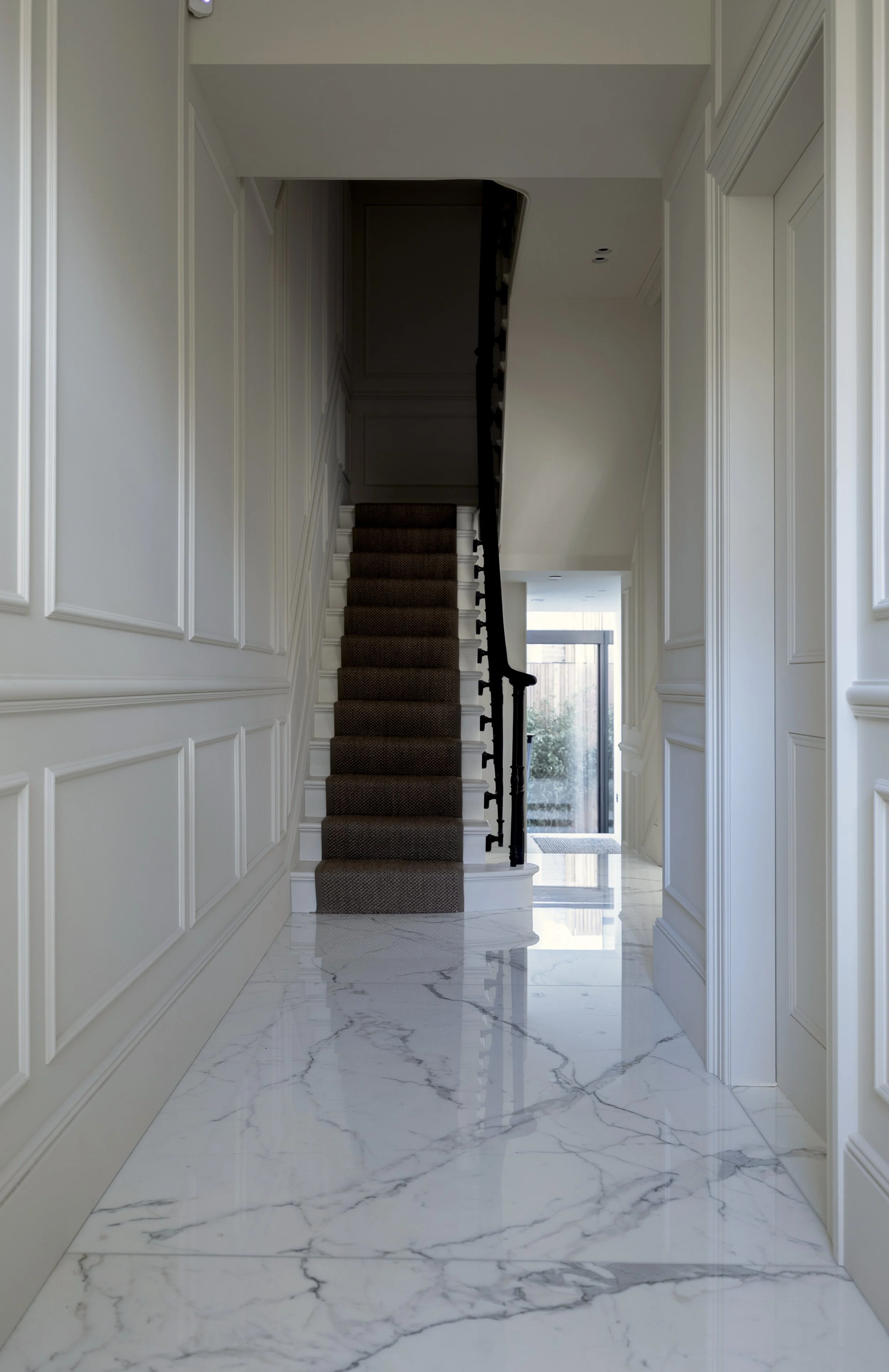
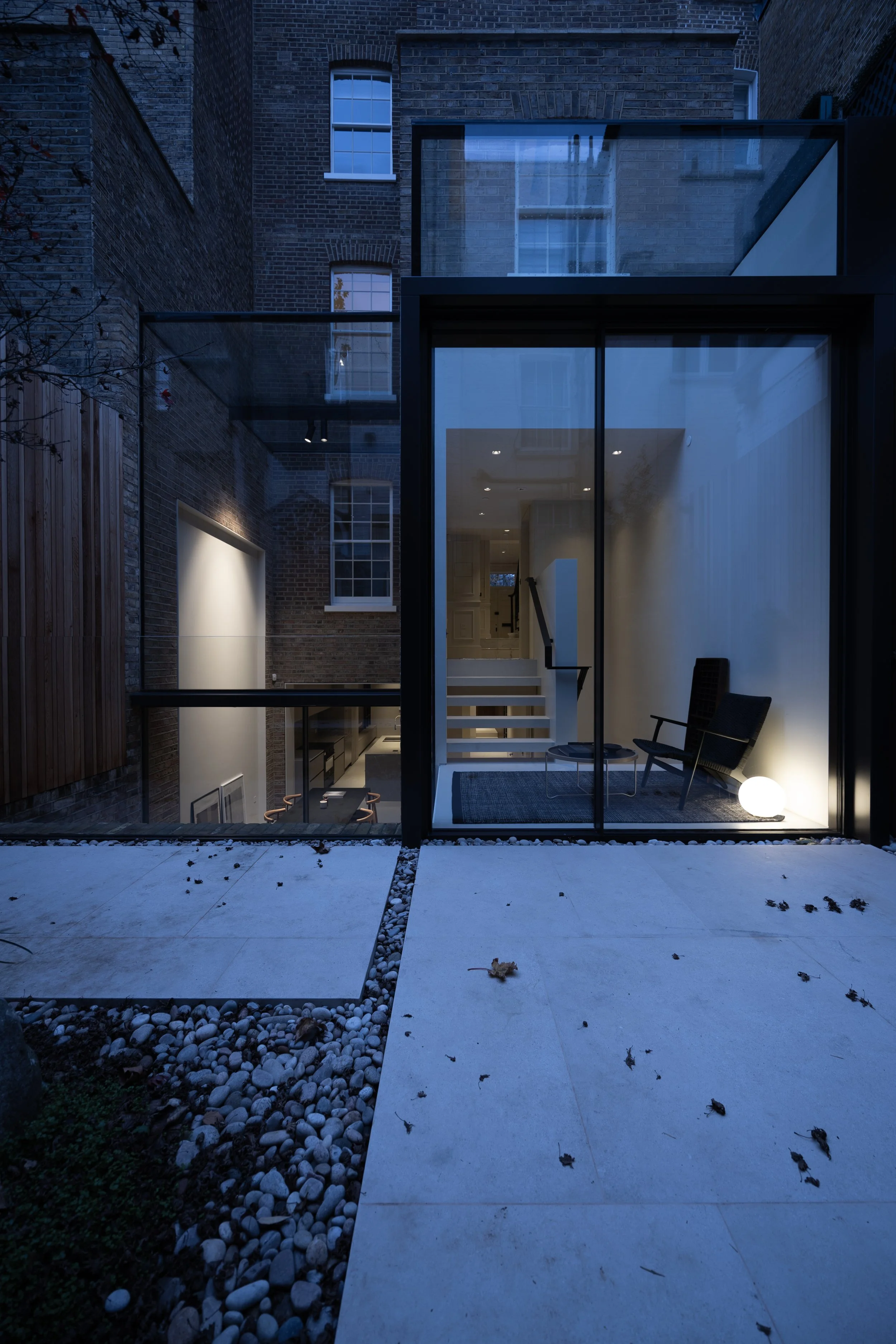
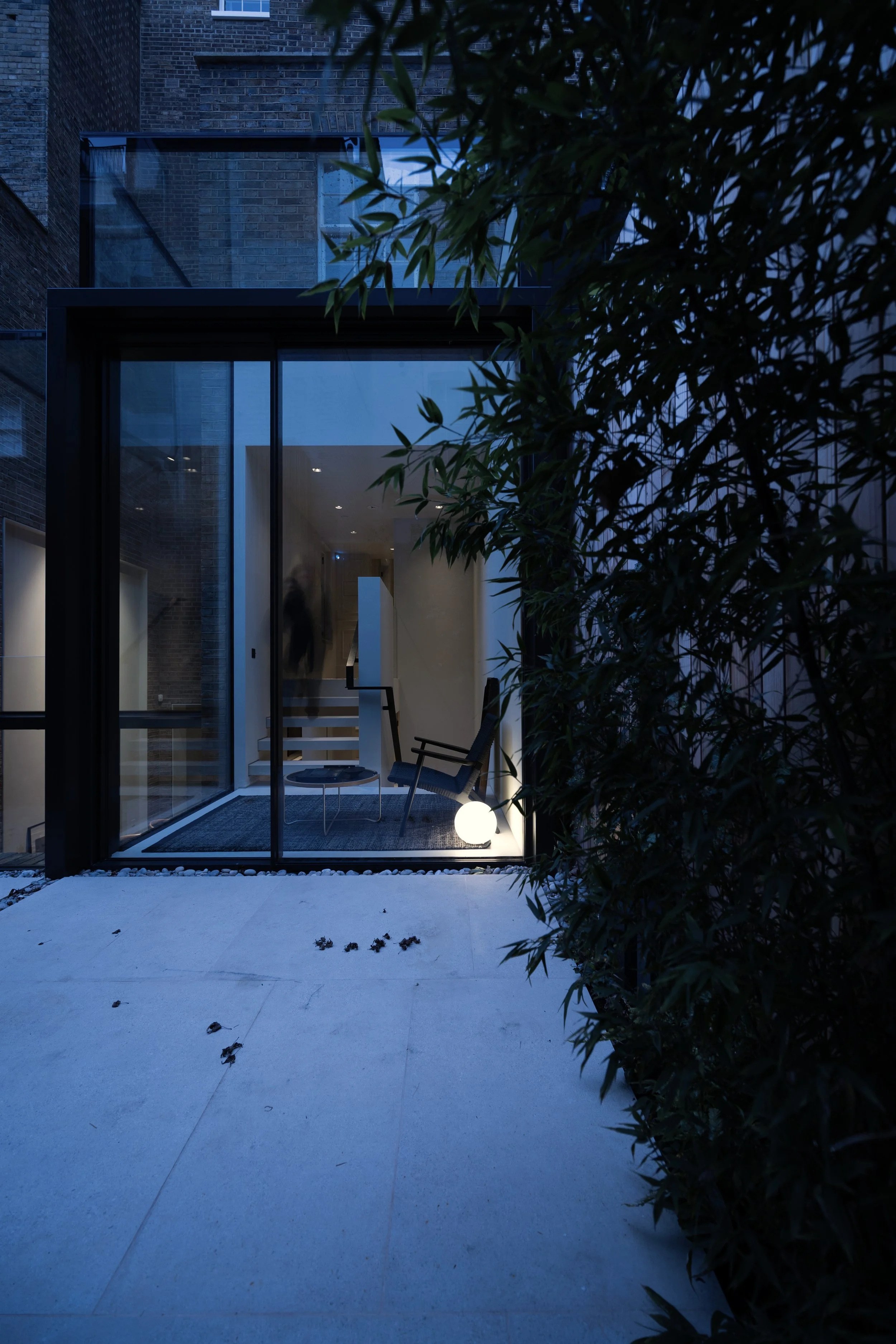
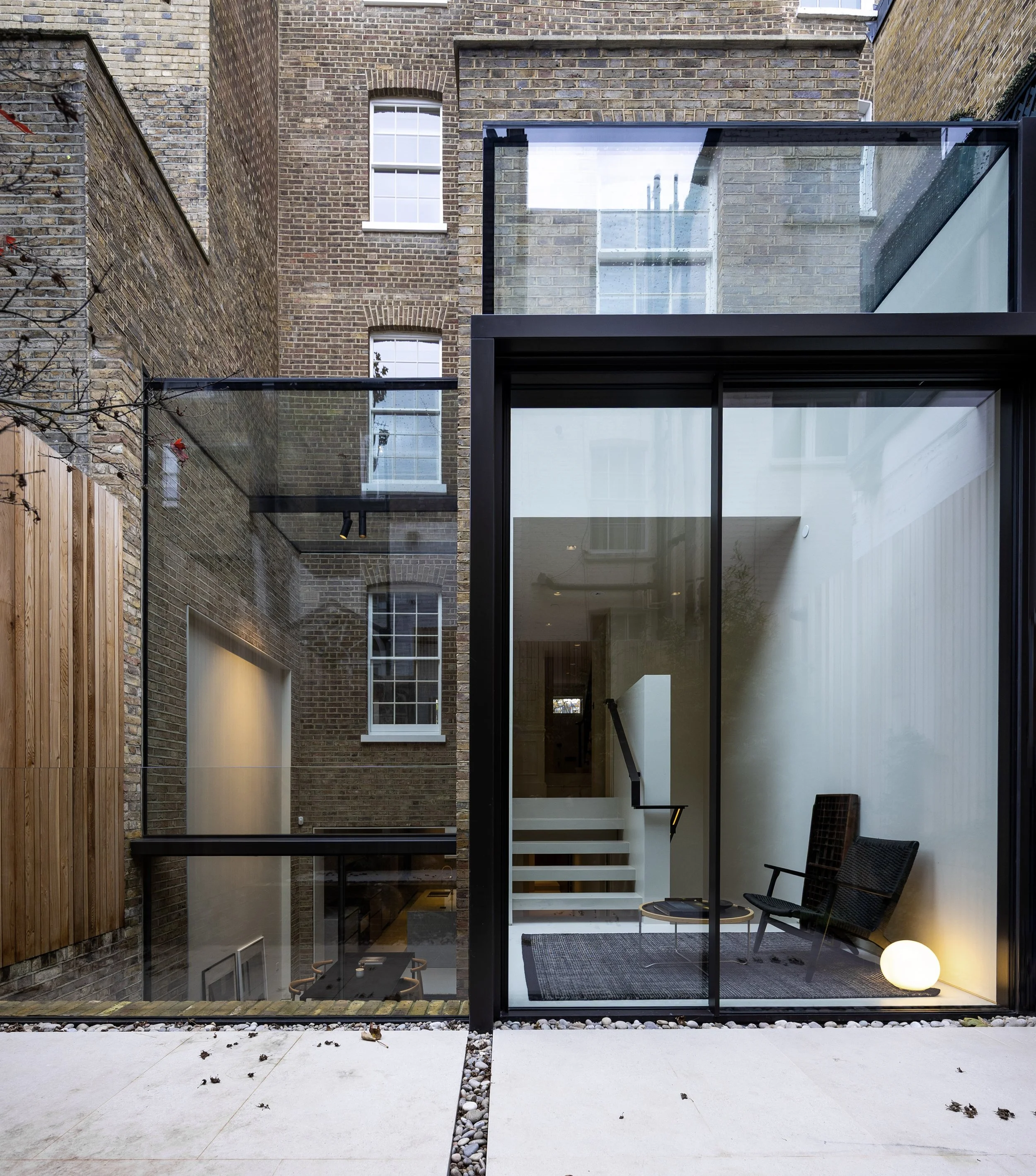
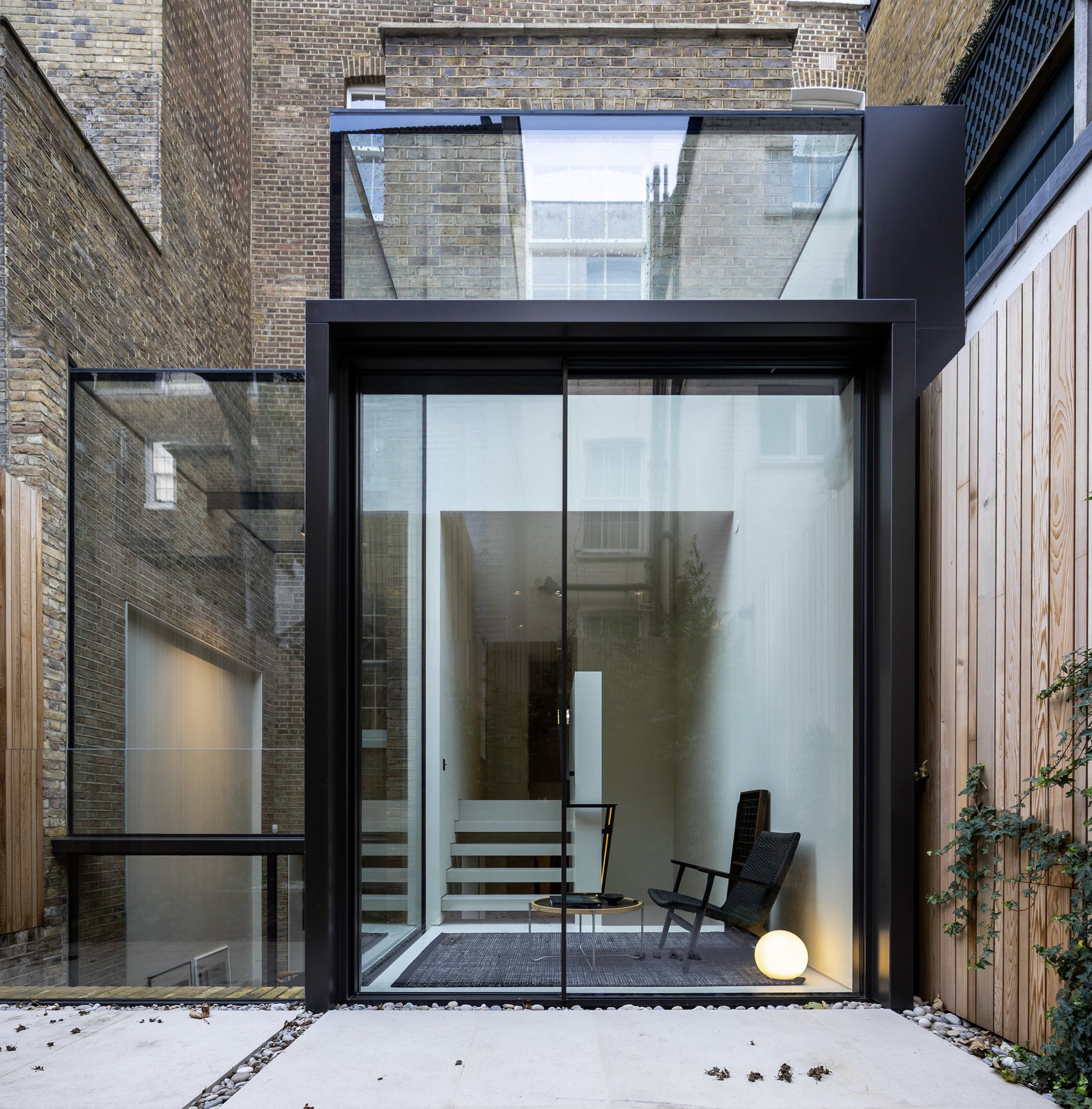
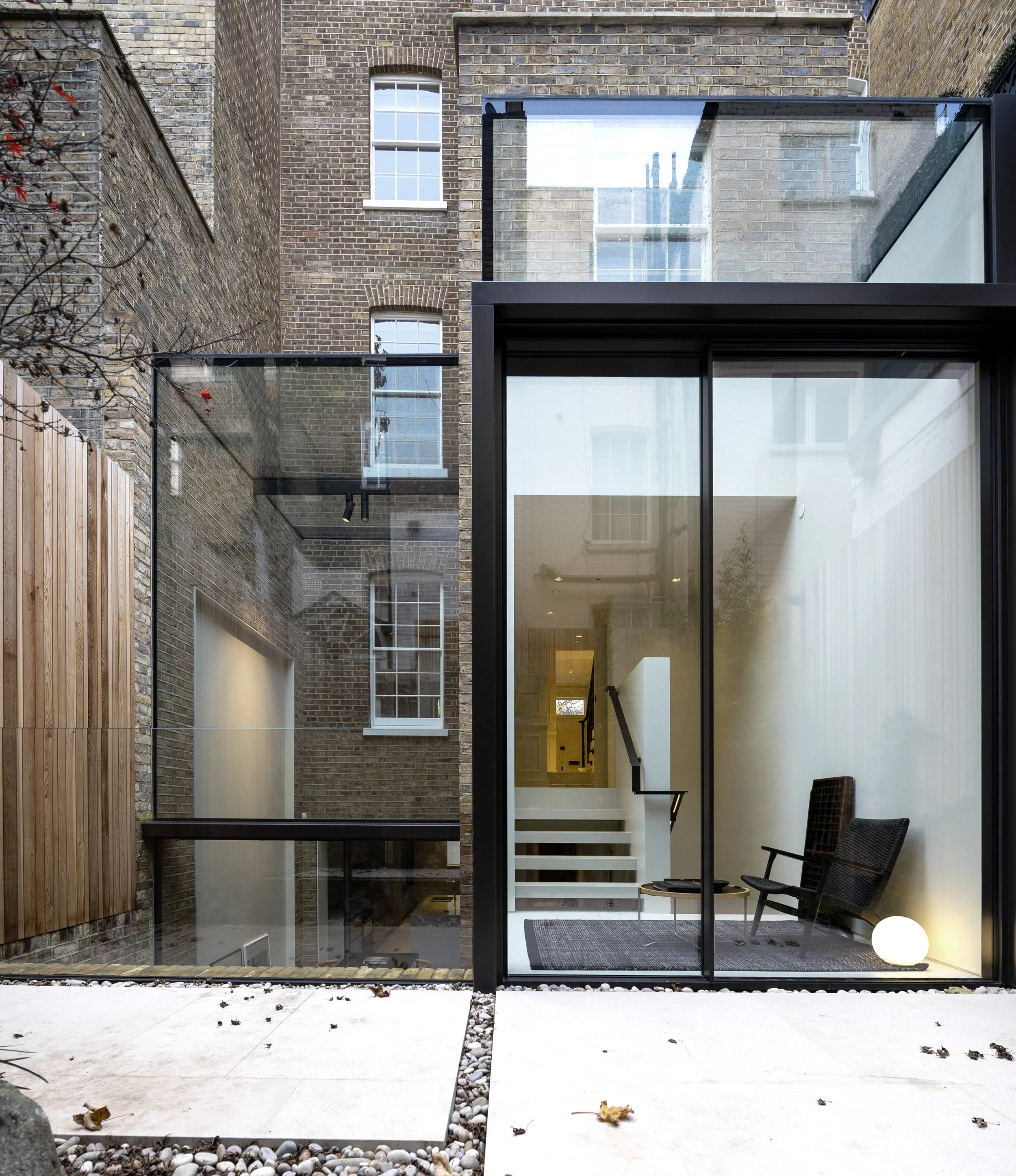
Externally, the rear elevation had been heavily altered from the building’s original massing.
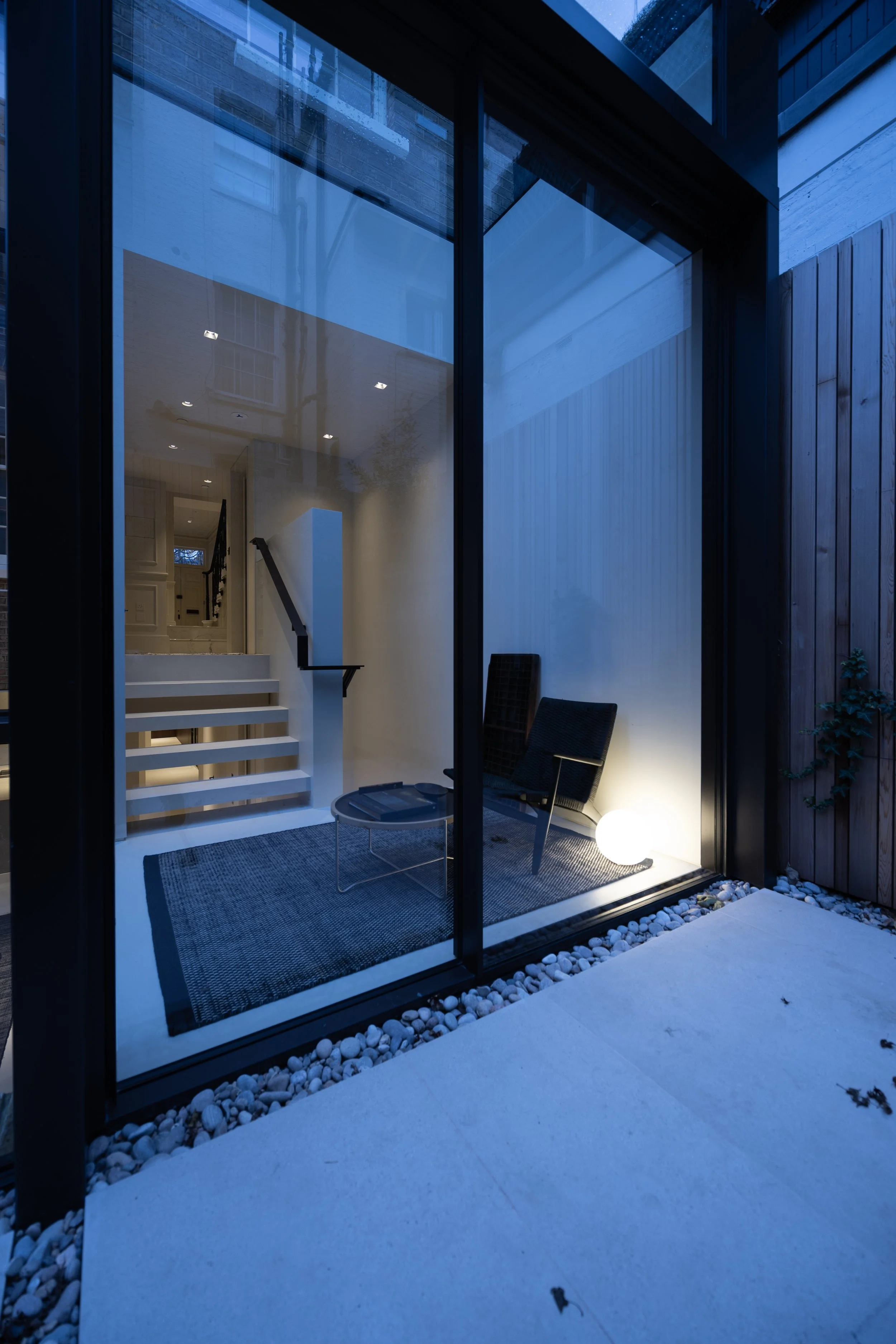
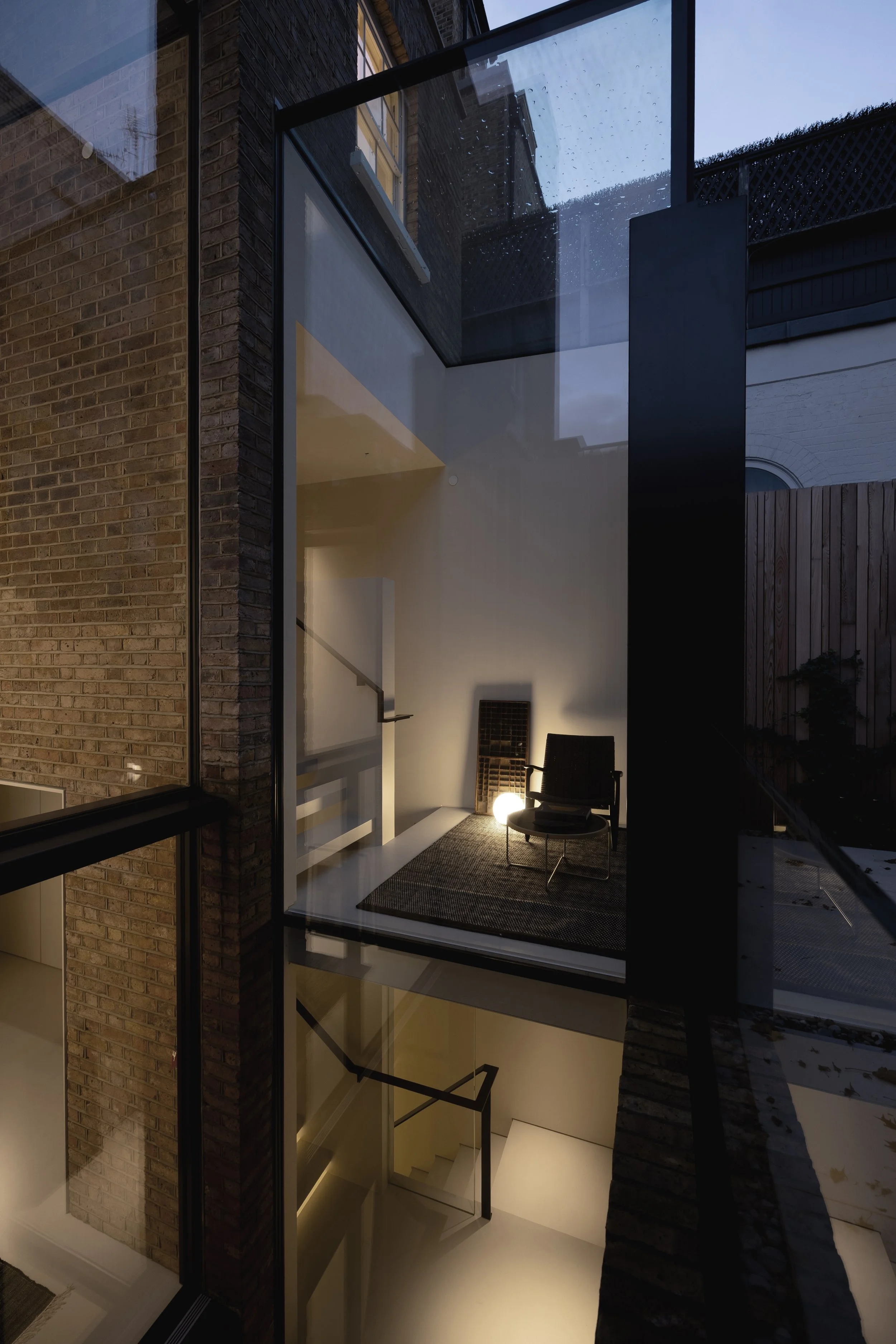
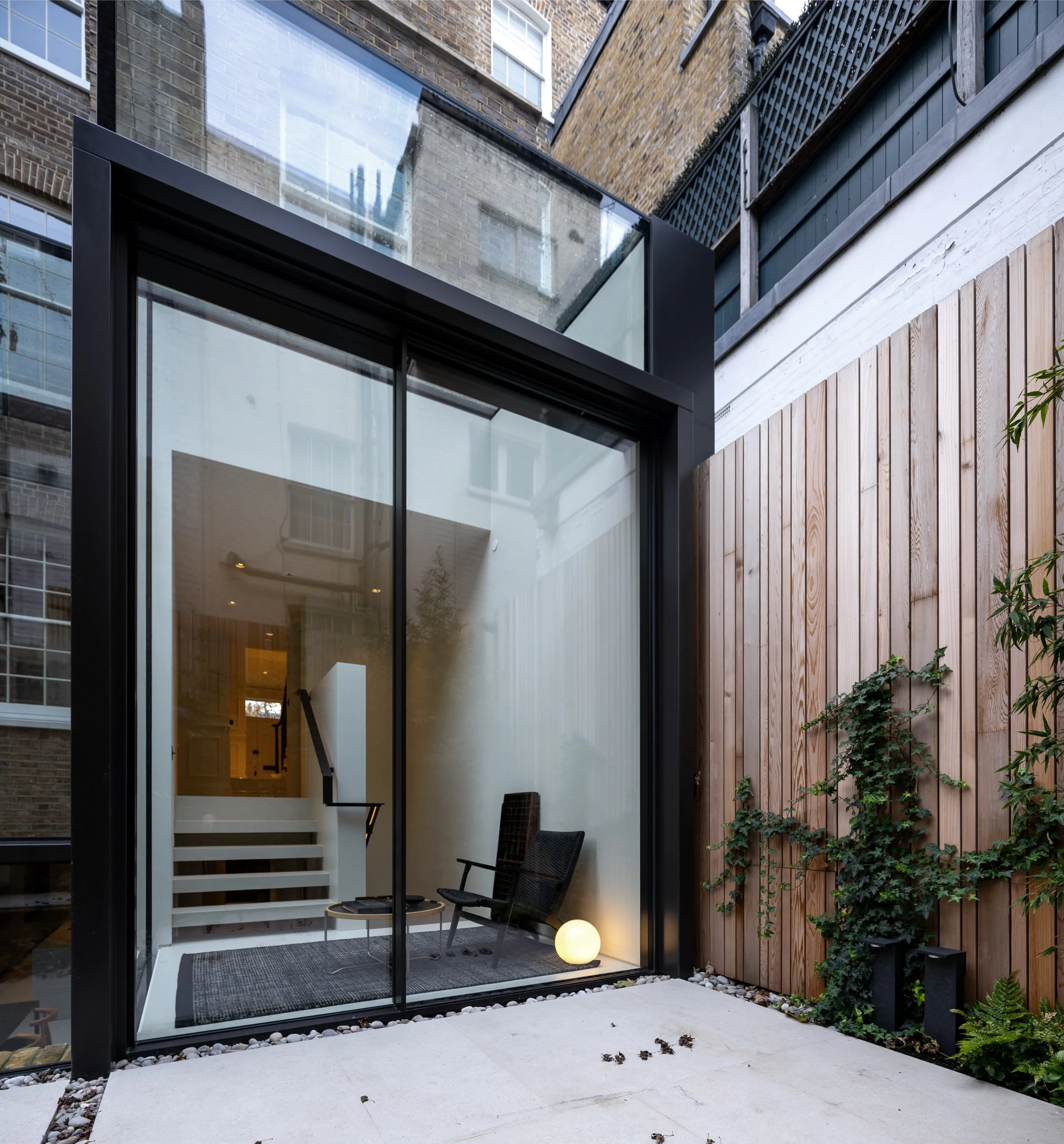
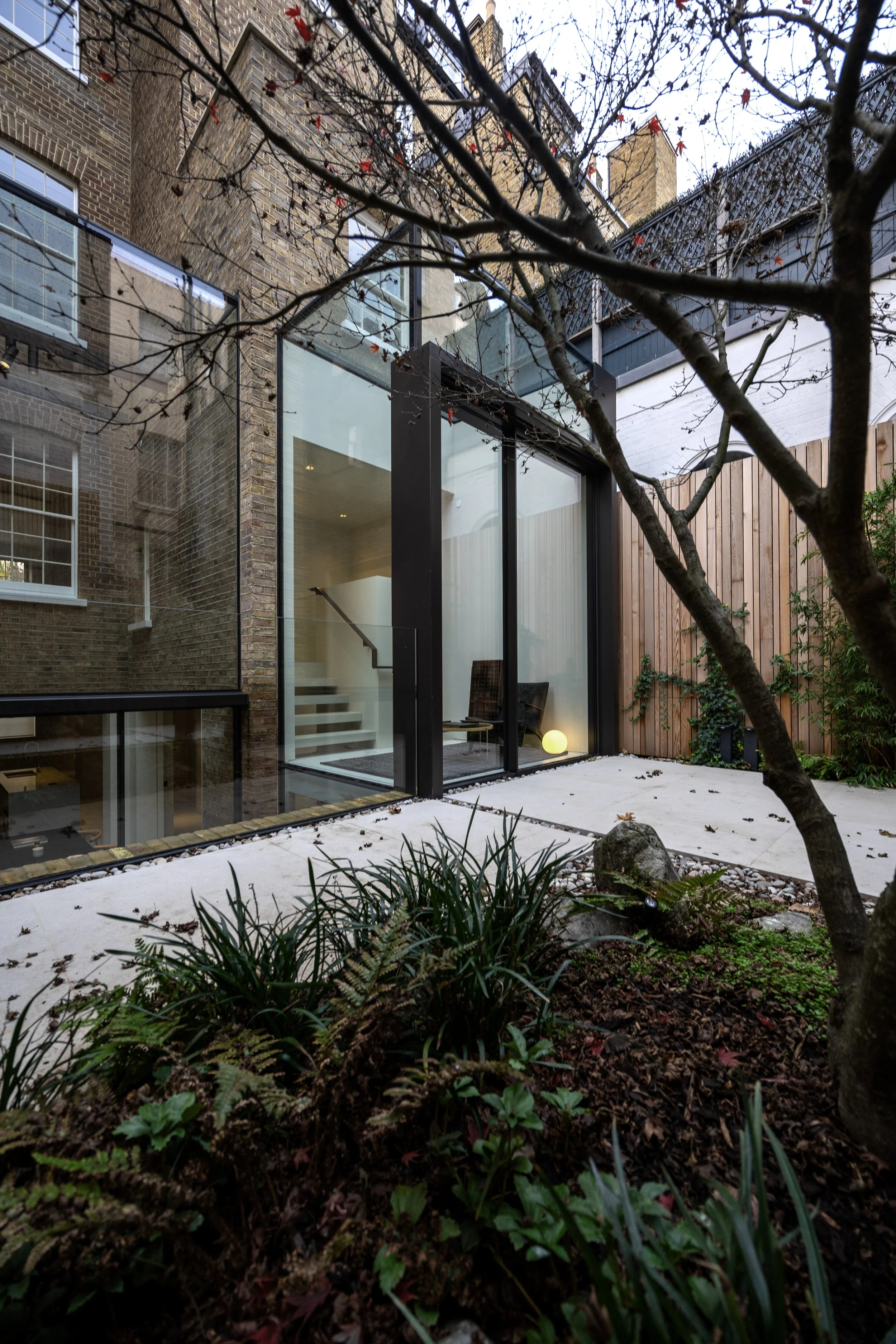
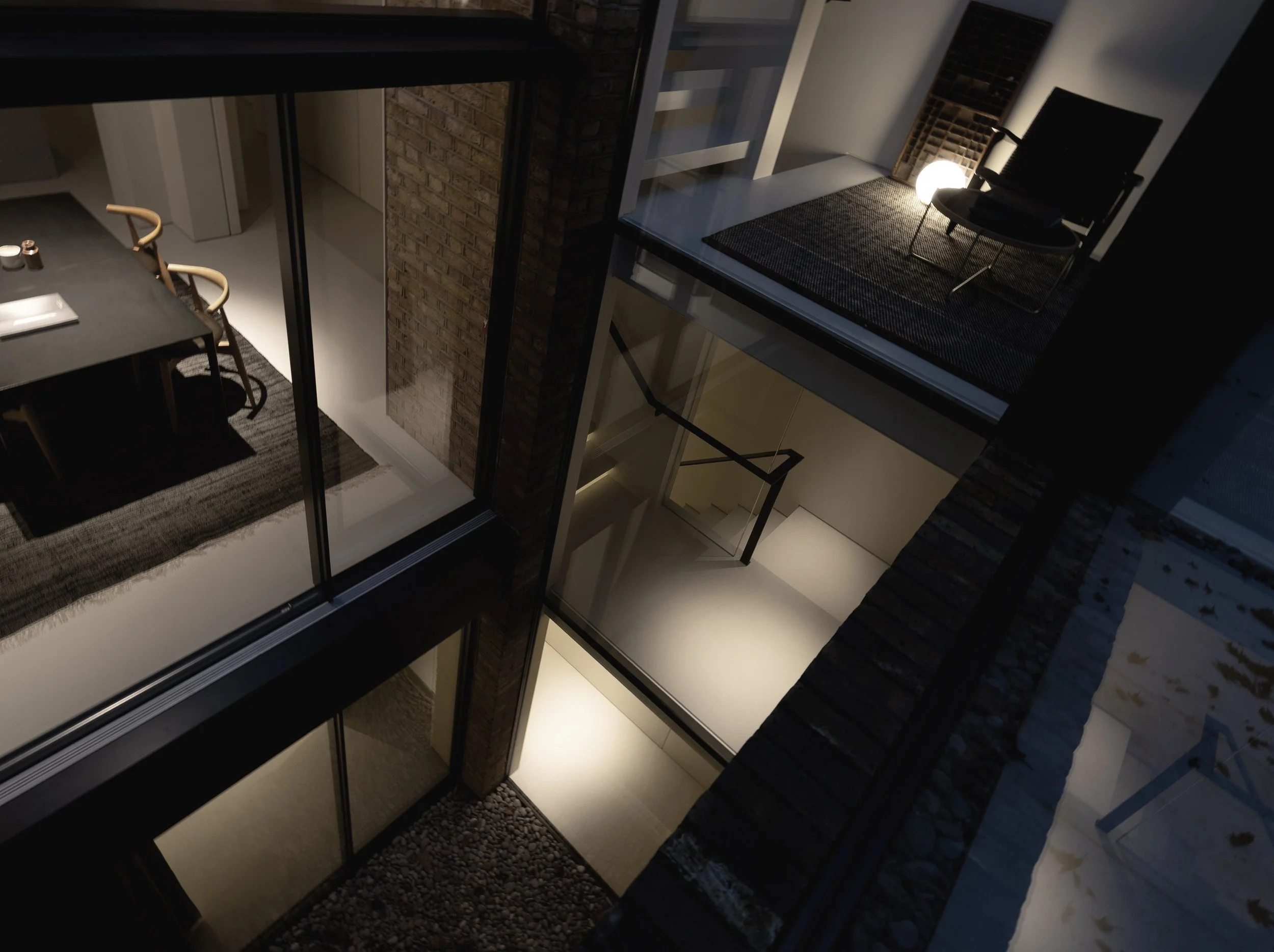
Our approach was to reinstate the original outline of the house, restoring its historic form and proportions. New interventions were designed as highly transparent extensions, allowing the original volume of the building to remain clearly legible and visually dominant.
This sensitive and pragmatic approach to the restoration of a historic building was extremely well received by Westminster Council, who welcomed the clarity of the strategy and its respectful response to the building’s heritage.
BASEMENT
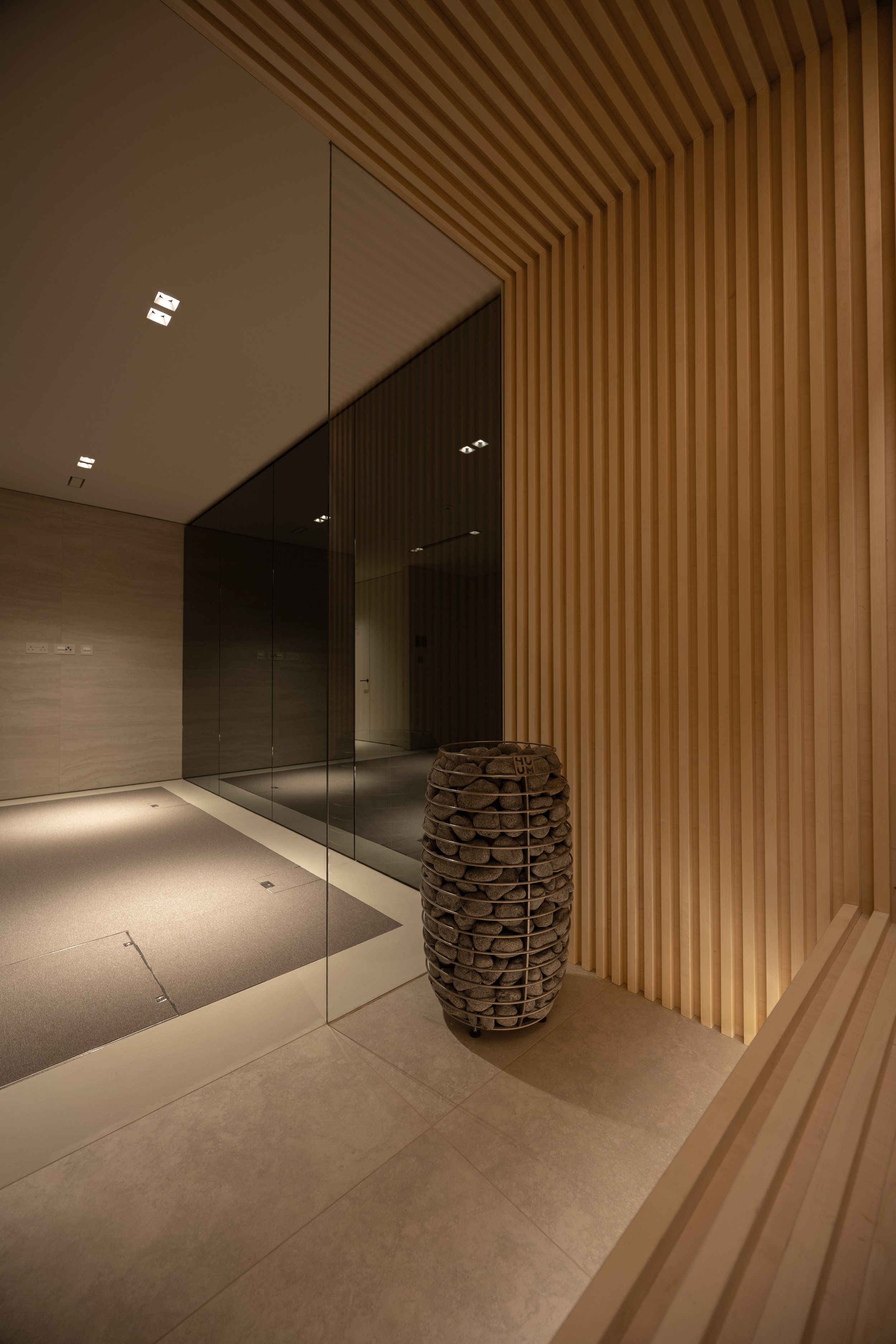
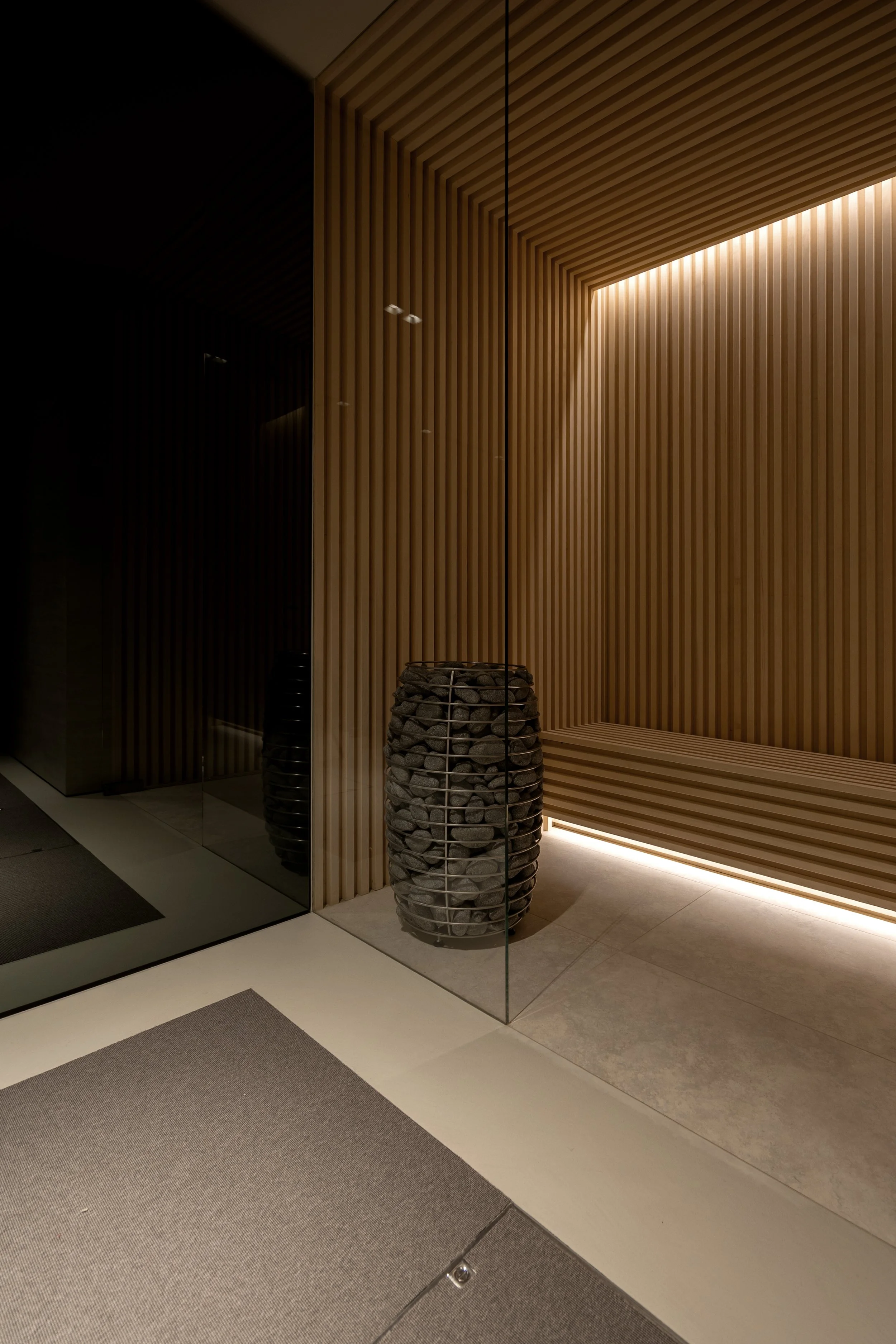
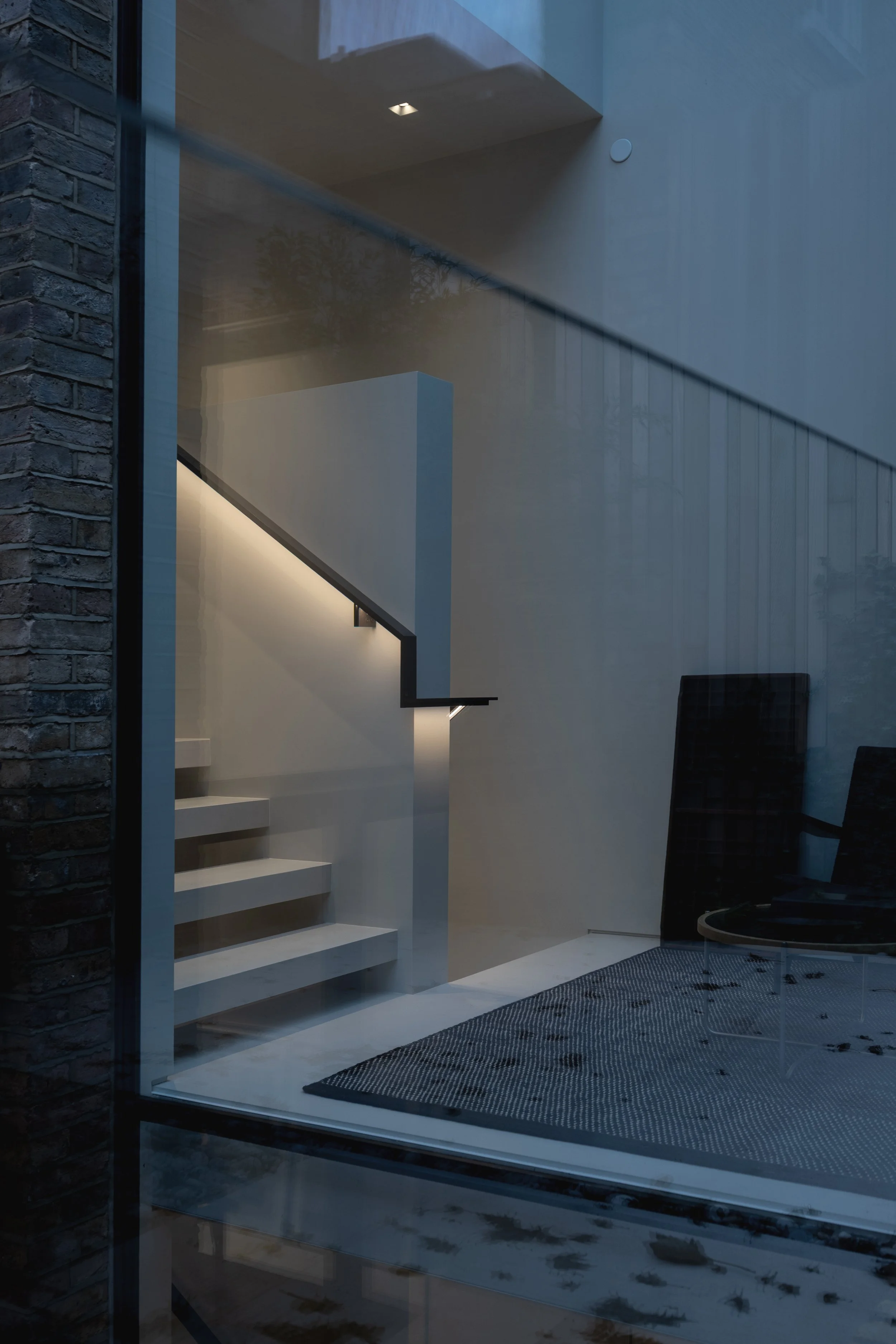
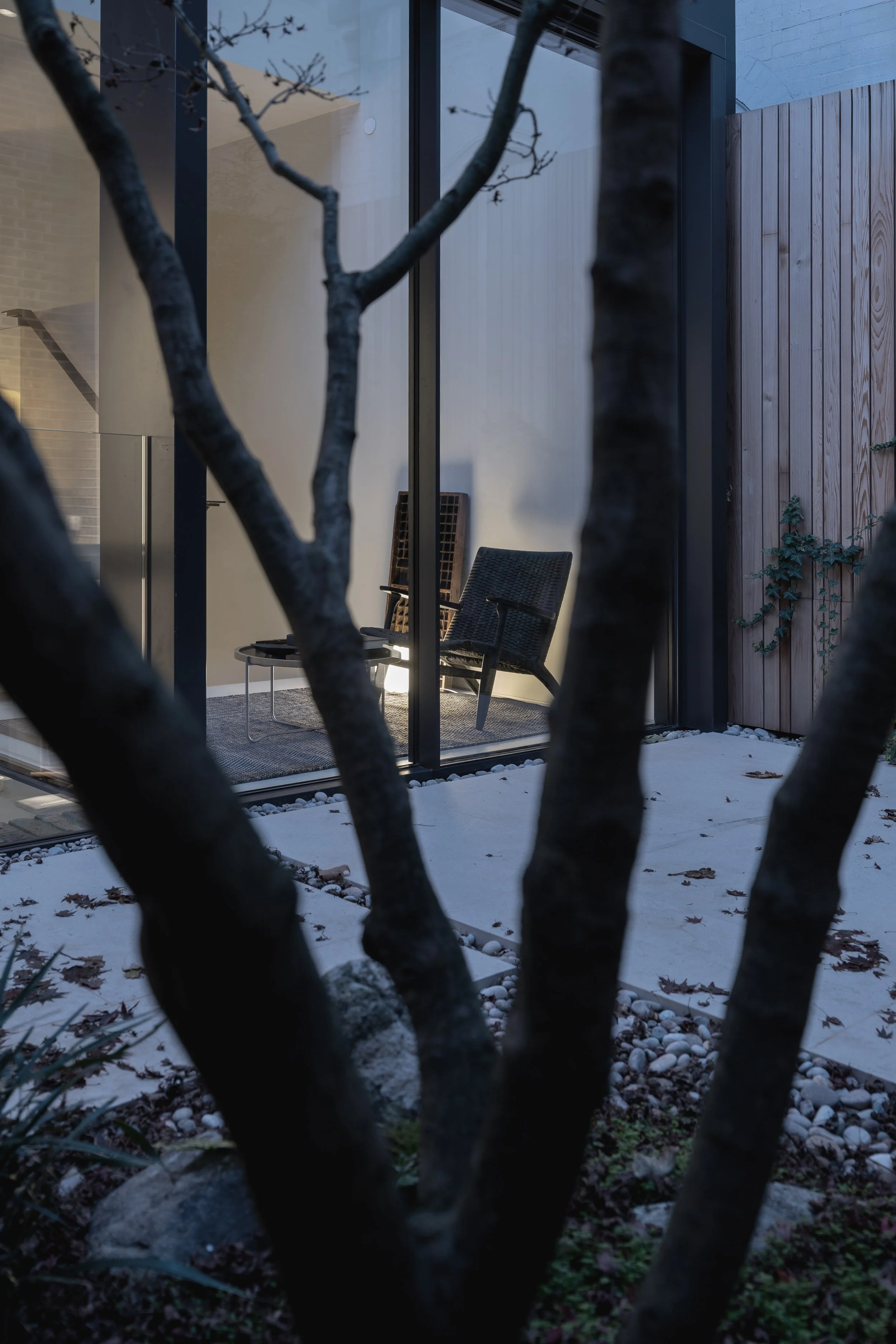
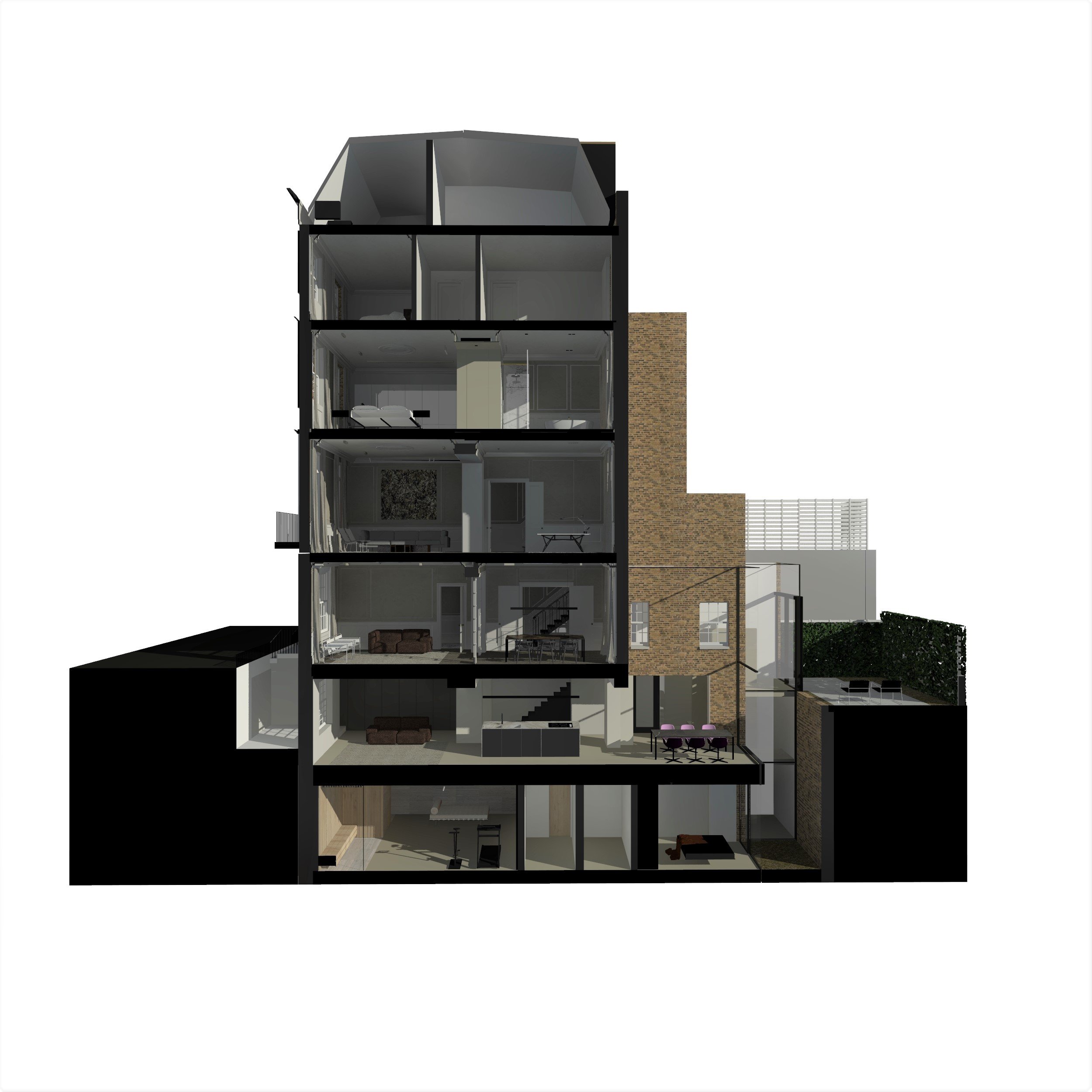
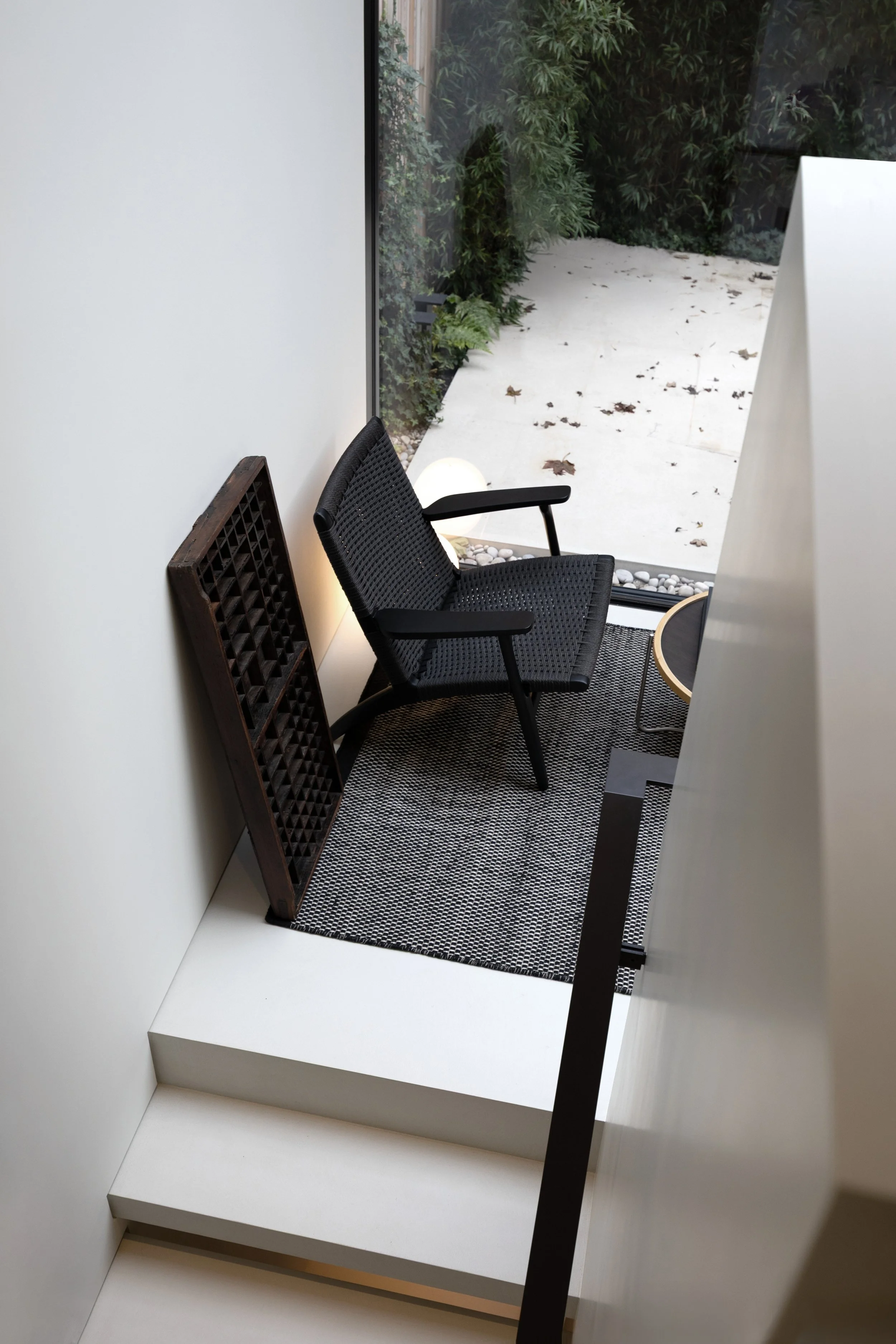
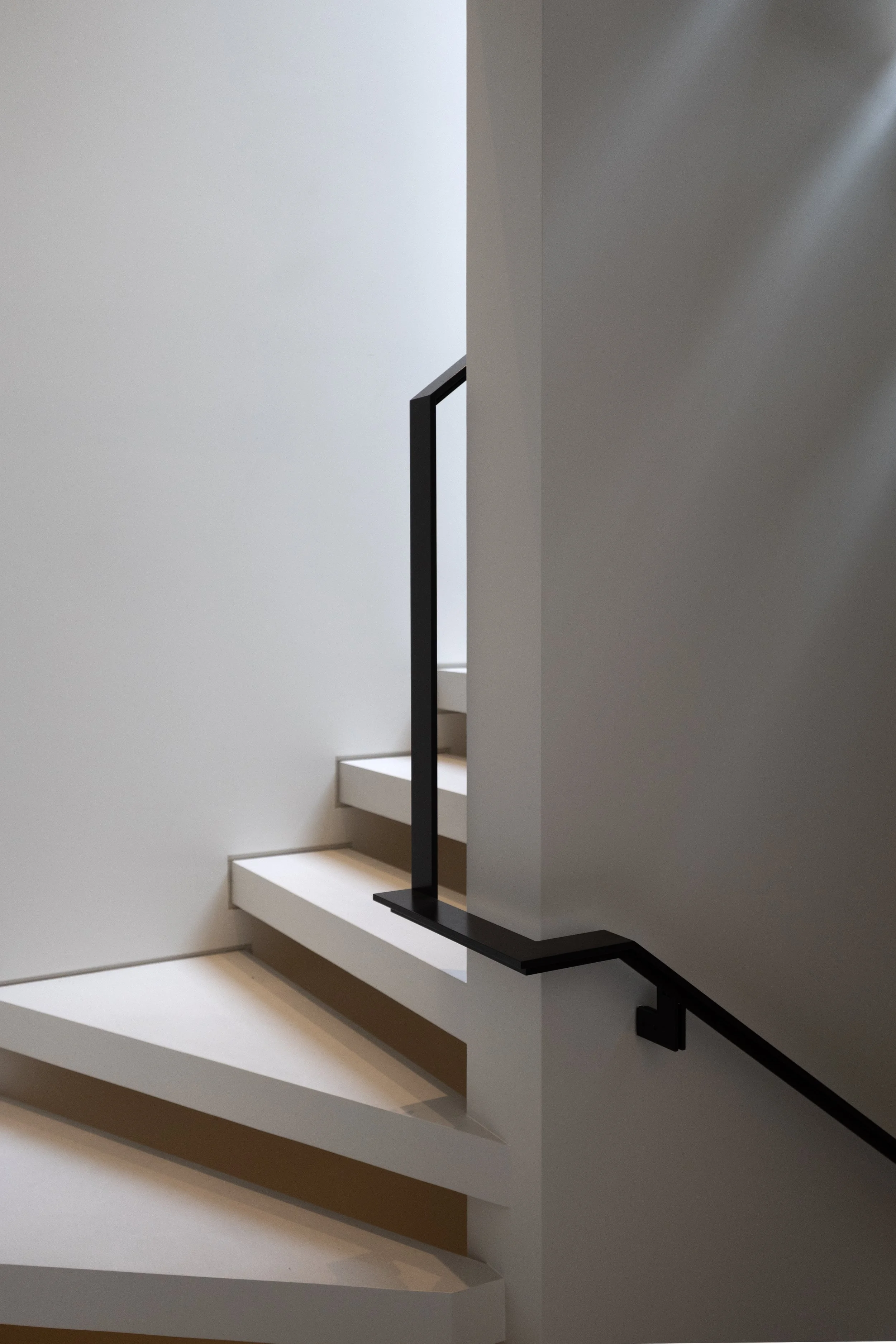
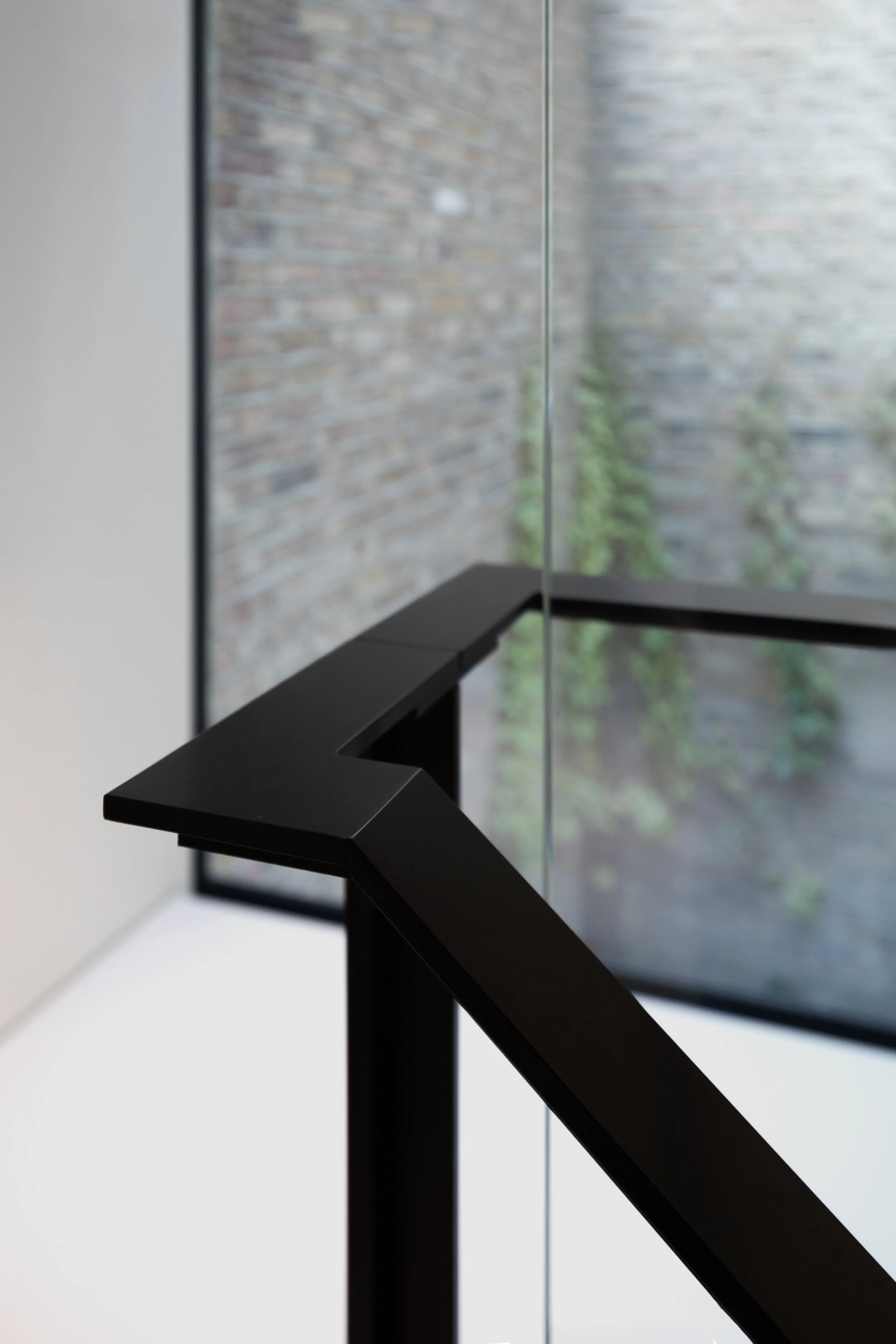
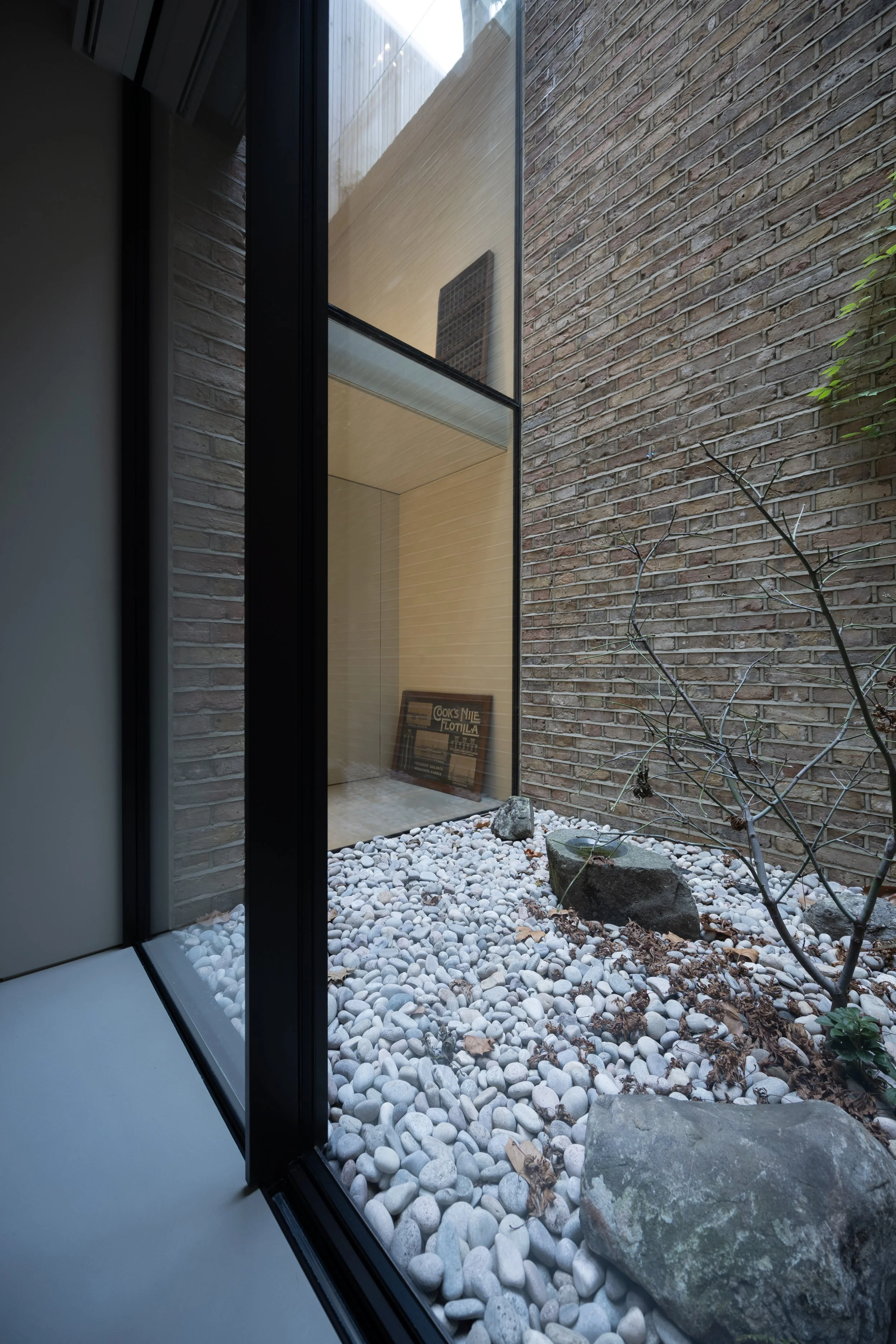
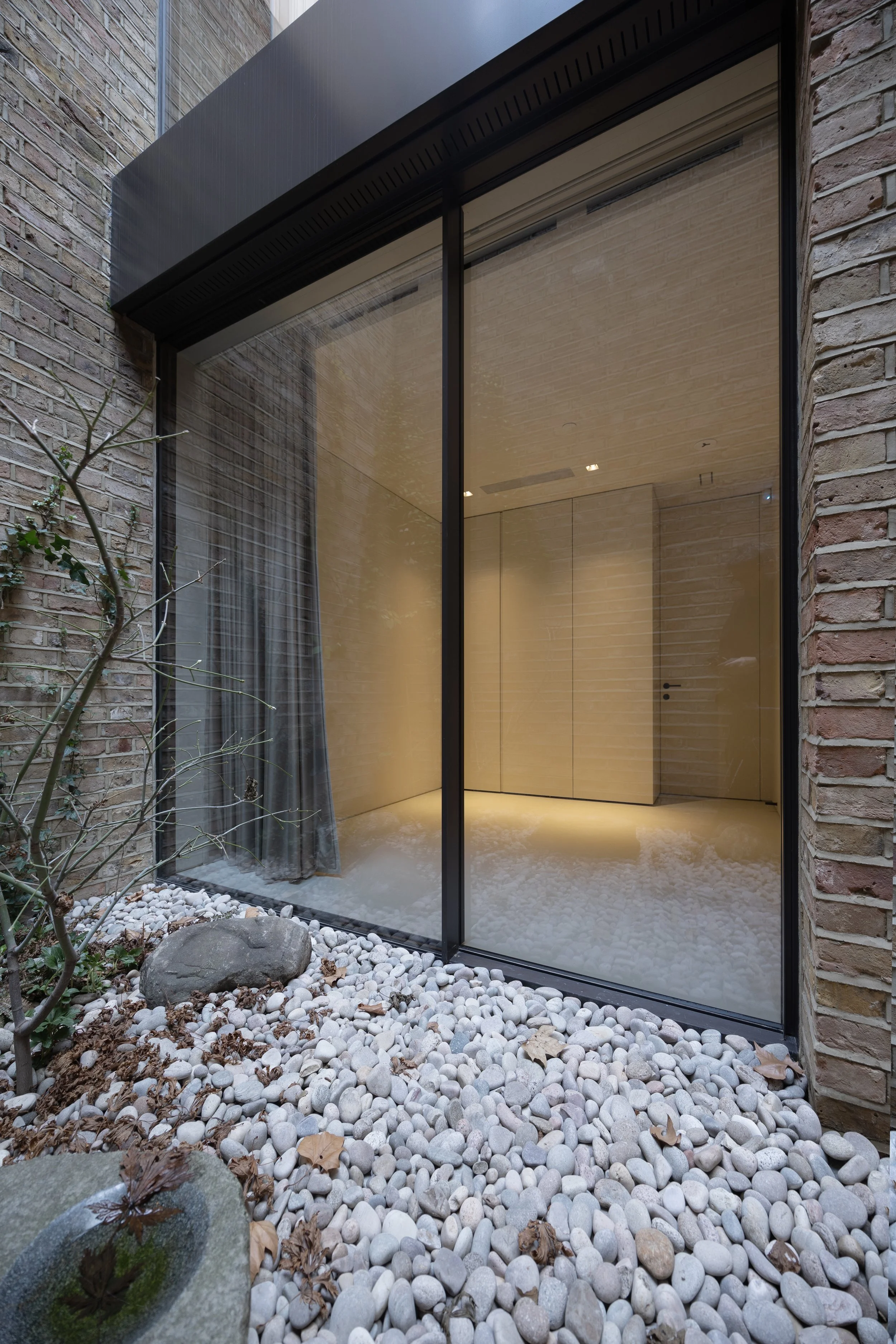
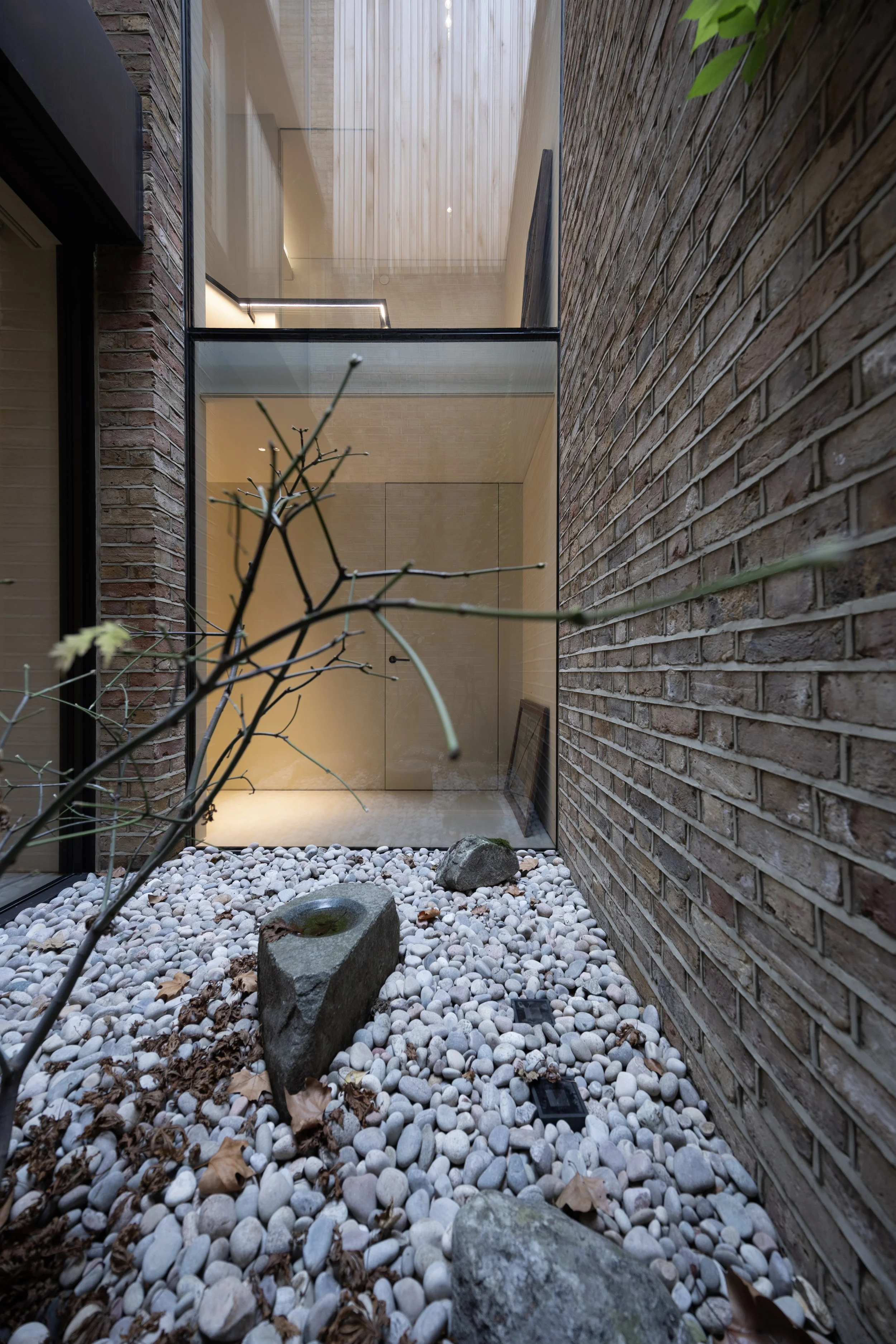
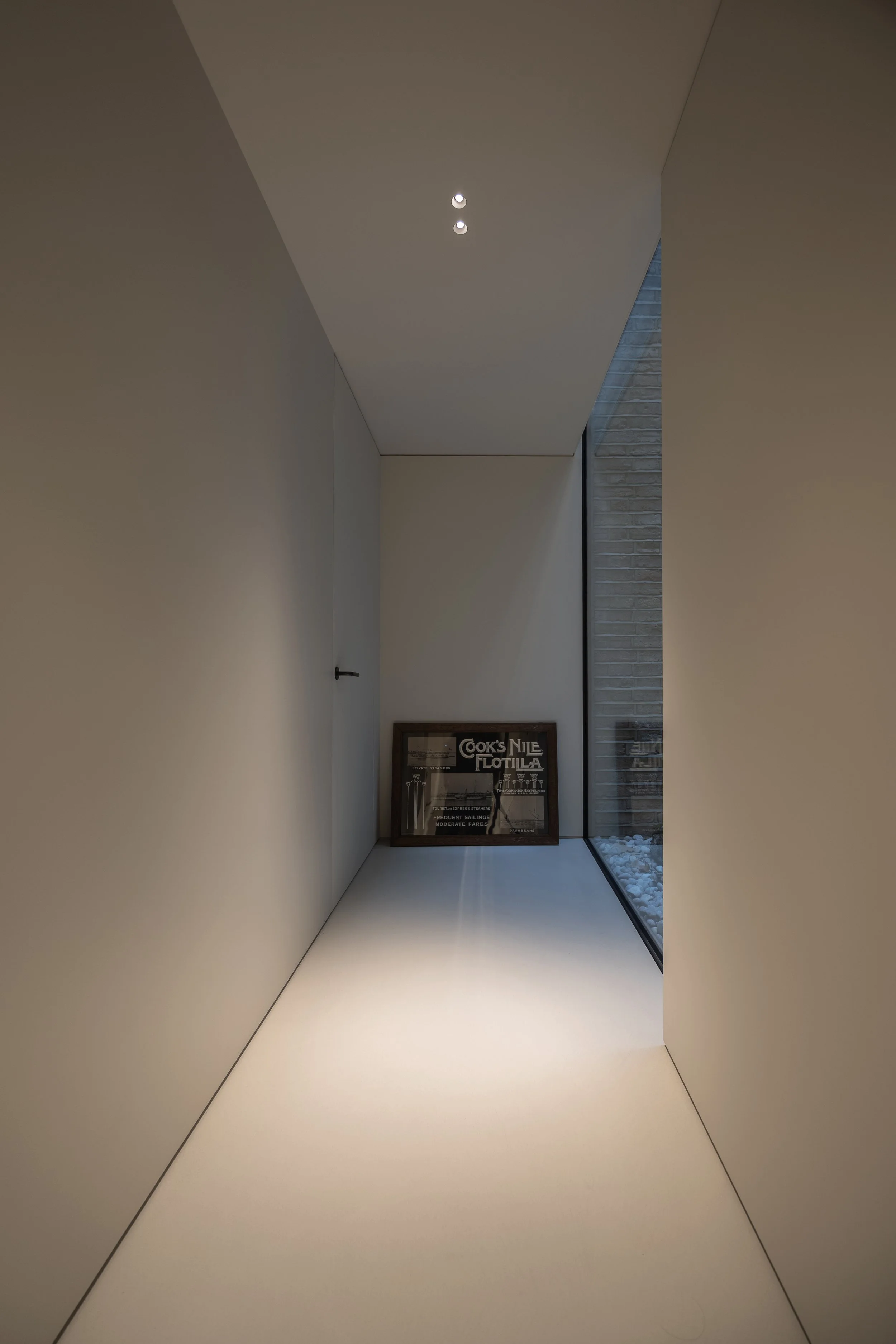
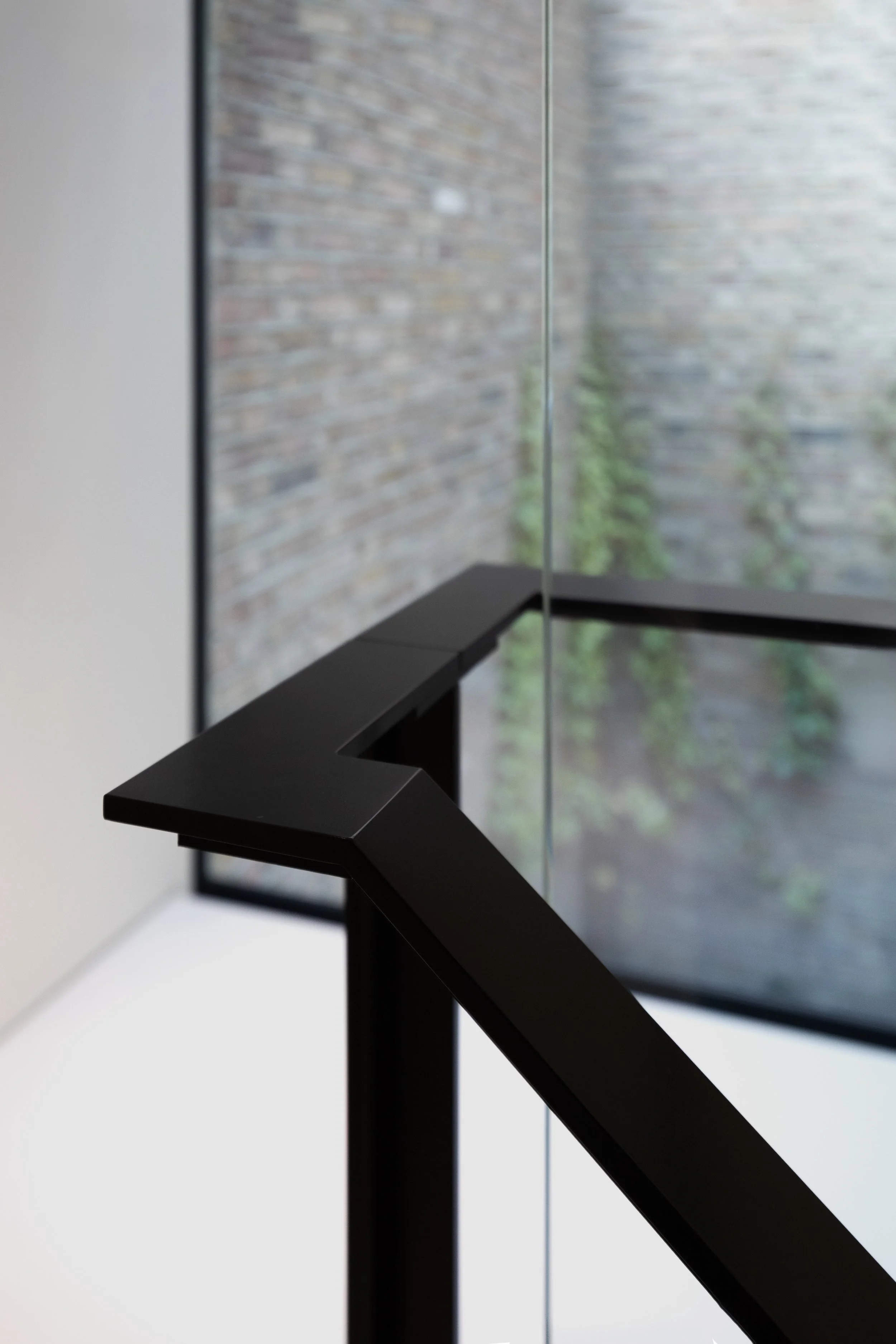
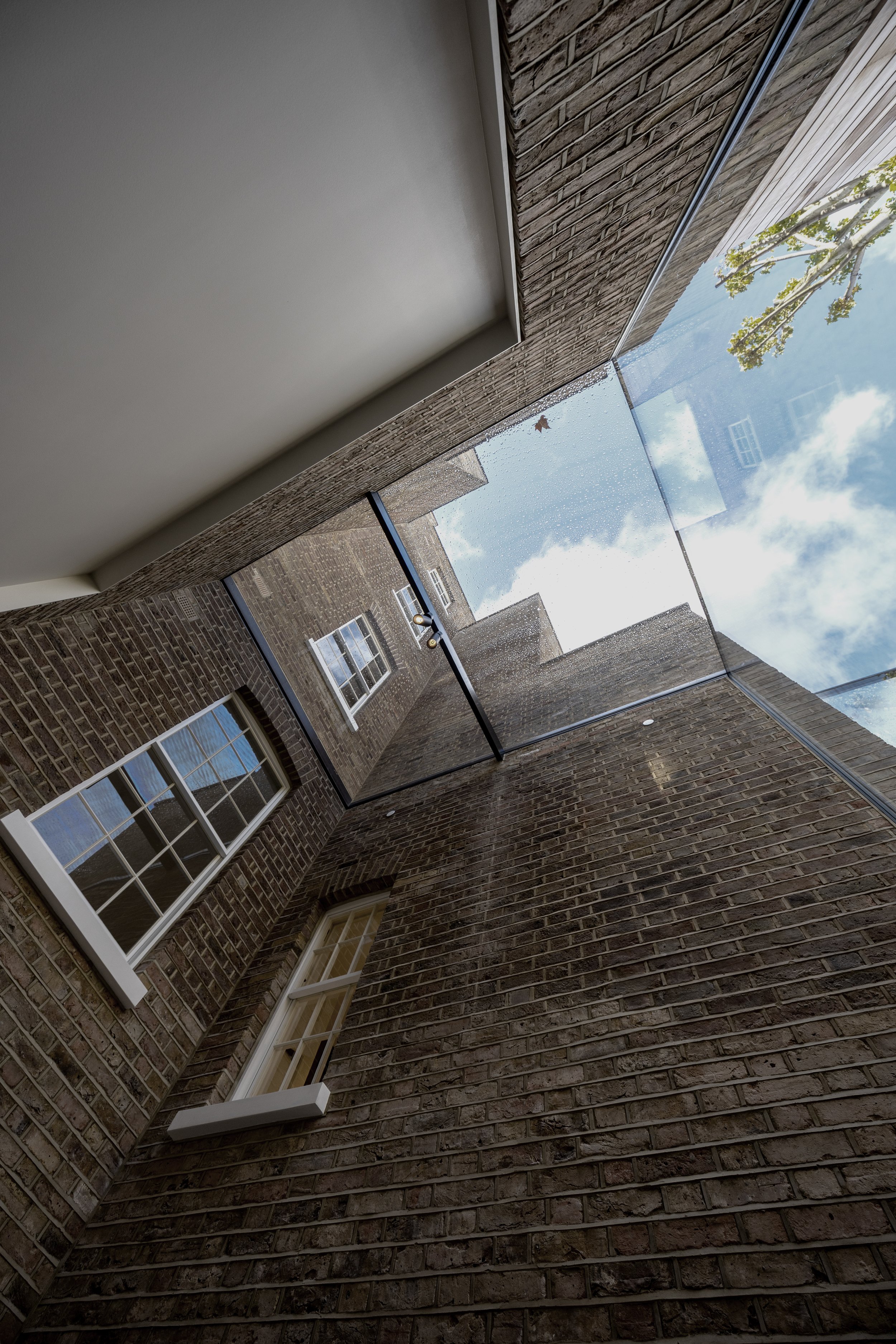
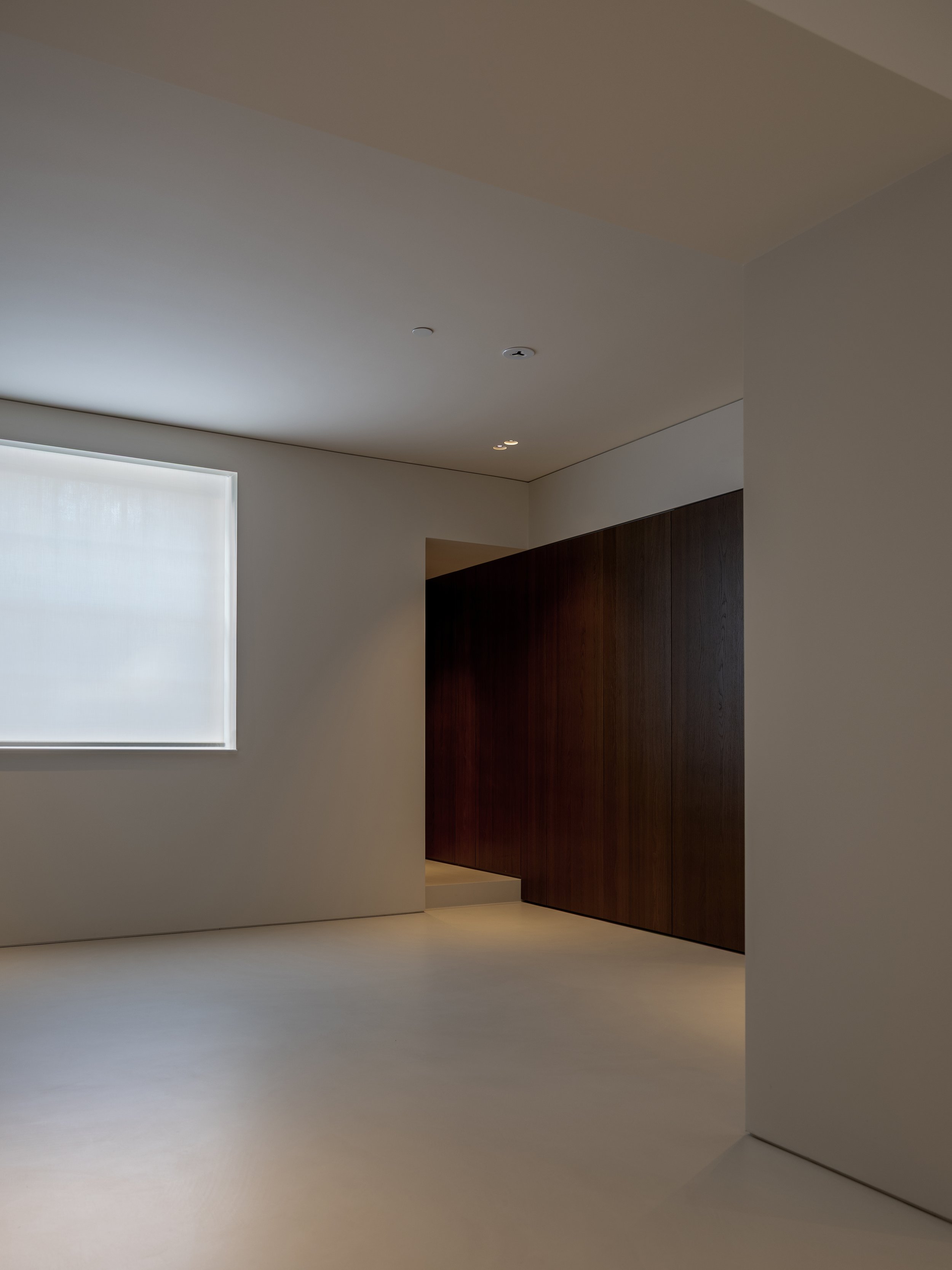
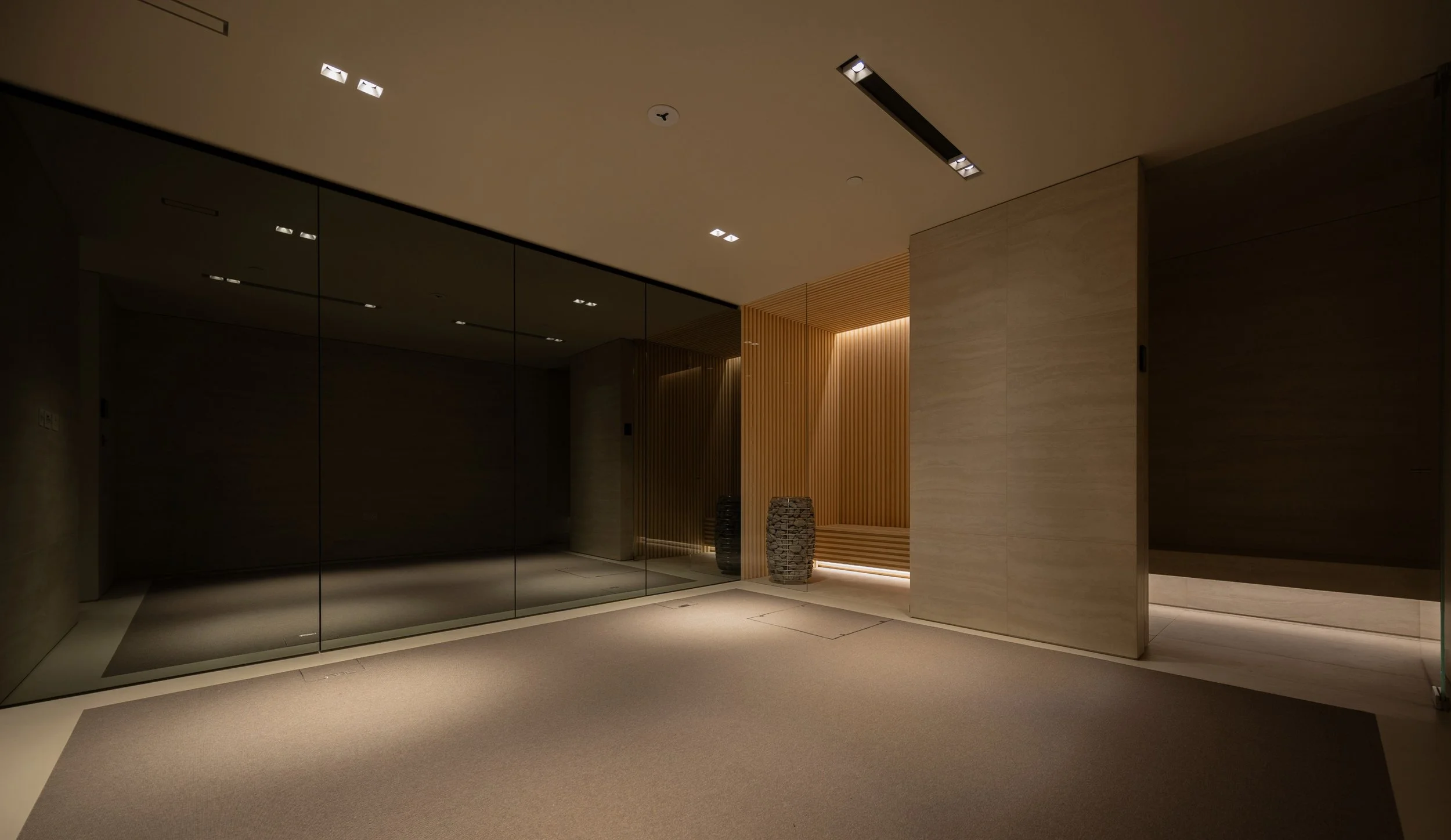
The project involved the excavation of a completely new basement to accommodate a utility room, an additional bedroom, service spaces, and a dedicated wellness area. A small courtyard was introduced to bring natural light into the staircase and the secondary bedroom, while also creating an engaging outdoor space that enhances daylight, natural ventilation, and spatial quality at basement level.
Wellness
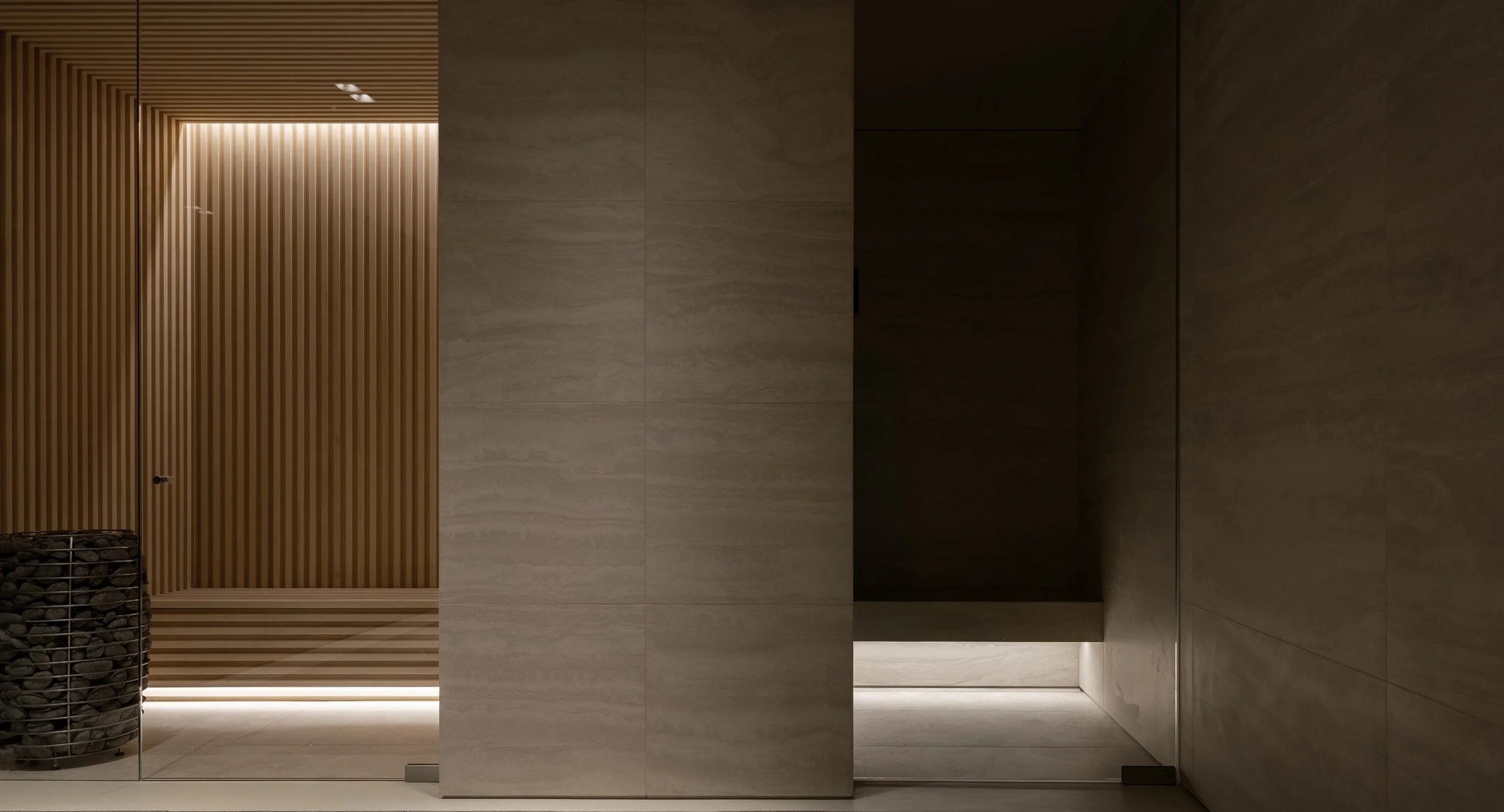
The project includes a wellness area featuring a bespoke sauna, a steam room, and a dedicated space for sports equipment. A warm, inviting material palette has been carefully chosen to enhance the overall atmosphere
New!